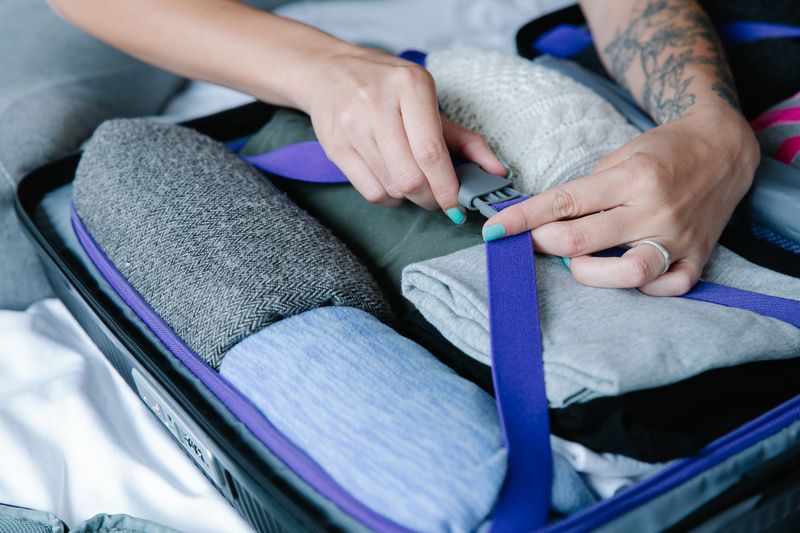
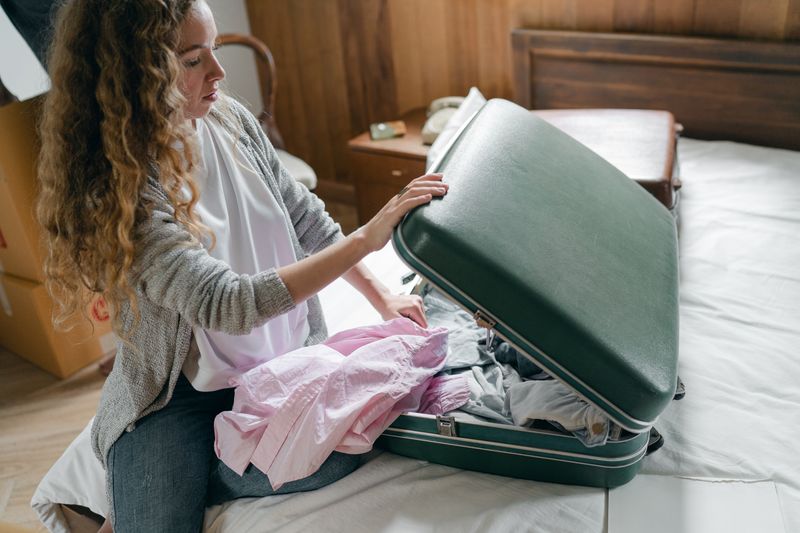
Packing
Packing for a child is packing for the failure cases
A child's bag is dominated by what happens when things go wrong, so it is planned around spills, delays and lost items rather than around a list of days.

Adult packing is a subtraction exercise. Packing for a child is closer to contingency planning, because the consequences of being short of something are immediate and unavoidable.
Clothing is consumed faster than it is worn
Children go through clothes for reasons unrelated to the number of days: food, weather, mud and accidents. The usual one-outfit-per-day arithmetic underestimates by a wide margin.
The practical adjustment is more of the small, light items and no more of the bulky ones. Extra tops and underwear cost little volume; extra coats cost a great deal.
A full change in the day bag rather than the hold bag is the single highest-value decision, because the moment it is needed is rarely near the accommodation.
The travel day is the hardest part to pack for
Delays affect children disproportionately because their tolerance is shorter and their routine is fixed. The bag has to cover a longer day than the one scheduled.
Food that does not need refrigeration, water that survives a security check, and something to do that does not need a screen or a socket are the working essentials.
Splitting these across two adults' bags means a separation, a queue or a gate change does not leave everything with the wrong person.
Familiar objects do specific work
Sleep in an unfamiliar room is easier with a known object and a recognisable routine, which is why a specific toy or blanket earns its space on a strict packing list.
Because losing that item is a significant event, it is worth knowing where it is at all times and worth being unremarkable enough to be replaceable if it is not.
Routine objects carry the same weight for smaller reasons, so a familiar cup or a known bedtime book often does more for a difficult evening than anything bought at the destination.
Medication and documents follow their own rules
Anything a child takes regularly should travel in the cabin, in its labelled packaging, in quantities that cover a delay rather than only the trip.
Children often need their own documentation, and some countries ask for evidence of parental consent when a child travels with one parent or with another adult.
Requirements differ by country and change, so the confirmation worth having is from the airline and the destination's own authority rather than from general advice.
Equipment can usually be rented
Cots, high chairs and car seats are bulky, and many accommodation providers and rental companies supply them, which removes the largest items from the luggage entirely.
The exception is a car seat, where a familiar and correctly fitted seat is worth carrying, since the rented alternative arrives without a history and often without an instruction manual.
Questions readers ask
Should I use a packing app?
Any tool works if you open it. The mechanism that matters is reviewing after the trip, not the format of the list.
How do I stop forgetting the same thing?
Add it to a standing list the moment you notice, at the destination rather than at home, while the memory is still specific.