Packing
What to carry when the checked bag might not arrive
Delayed baggage is a routine event with a predictable shape, and the entire cost of it is decided by what you kept with you.

There is a settled way of talking about delayed baggage. It is worth asking how much of it survives contact with the detail.
The argument in brief
- Bags are most often delayed rather than lost, and short connections are the main cause.
- Medication, documents, valuables and one change of clothes belong in the cabin.
- Airline liability for checked baggage is capped and applies per passenger.
Delayed, not lost
The overwhelming majority of separated bags are reunited with their owner within a few days rather than lost permanently. The usual cause is a connection too short for the baggage system rather than anything dramatic, which is why tight transfers and last-minute gate changes raise the risk. Bags checked late, at the gate or on the final flight of the day are also disproportionately represented.
Planning for a delay of one to three days covers almost every case you will actually encounter.
The cabin list
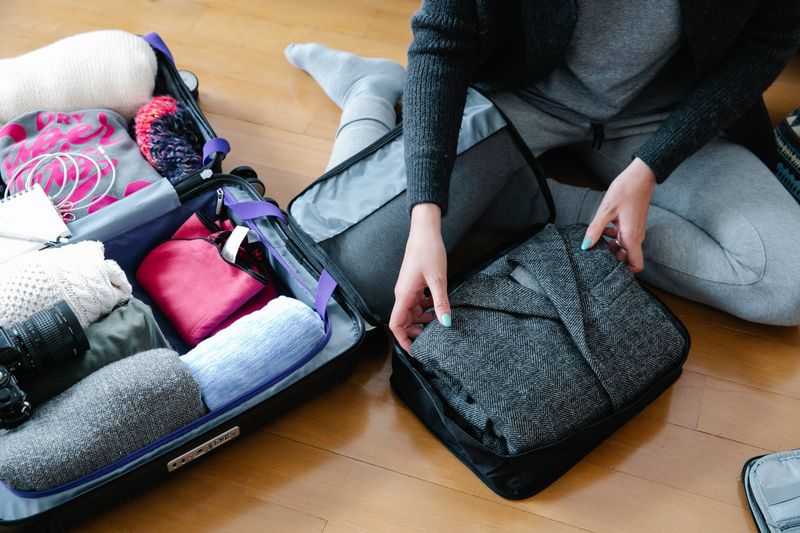
Prescription medication, glasses or lenses, passport and travel documents, payment cards, phone, chargers and any irreplaceable item. One complete change of clothes including underwear, because that single item converts a ruined first day into an inconvenience.
The working rule: anything needed within twenty-four hours of landing: a suit for a morning meeting, a keynote presentation, hiking boots for a dawn start. Everything on this list is small, and the whole set fits comfortably in a personal item.
Make the bag identifiable and traceable
Remove old airline tags, because barcode readers occasionally scan the wrong one and send the bag where it went last time. A tag with a phone number and an email address inside the bag as well as outside survives the outer tag being torn off.
A bag with a distinctive appearance is less likely to be taken by mistake at the belt, which is a separate and common failure. Bluetooth trackers do not speed up the airline's process but do let you tell them, accurately, where the bag is.
What to do at the airport
Report it before leaving the baggage hall, because the claim reference generated there is what every subsequent conversation depends on. Keep the reference, the tag stub and the boarding pass; without them the process becomes considerably harder. Ask specifically what the airline will reimburse for essential purchases and get the answer in a form you can point to later.
Airlines are generally obliged to deliver a delayed bag to your address rather than requiring you to return for it.
Money and liability
International conventions cap airline liability for checked baggage at a defined limit per passenger, and the exact figure and its application vary by route and jurisdiction. Reimbursement for essential purchases is usually against receipts, so keep every one, and buy what is necessary rather than what you fancy. Travel insurance often covers baggage delay after a stated number of hours and may pay faster than the airline, so check both.
In practice, declaring high-value items or insuring them separately is the only real protection for anything above the cap.
Structural ways to lower the risk
A single ticket with a generous connection is the strongest protection, because the bag has time and the airline carries the obligation. Direct flights remove the transfer entirely and with it most of the risk. On separate tickets you will normally collect and re-check anyway, which converts a baggage risk into a time risk.
In practice, not checking a bag remains the only complete solution, which is the least helpful and most reliable advice available.
The takeaway
Assume the bag arrives a day late and pack the cabin bag as if it will.
Every kilo you leave behind pays you back at the third connection.
Questions readers ask
How long before a delayed bag is officially lost?
Airlines commonly treat a bag as lost after around three weeks, but the exact period varies by carrier and by the applicable convention. Ask when you file.
Will my insurance pay for clothes while I wait?
Many policies pay a fixed amount after a stated delay, typically twelve or twenty-four hours, against receipts. Check the wording before you shop.