Packing
Compression works on air, not on objects
Vacuum bags and compression sacks do something real and something imaginary, and the difference decides whether they help you.
The options around compressing luggage are set out side by side below, with the conditions that genuinely favour one over the other.
The difference in one place
- Compression removes trapped air, so it works on insulation and not on solids.
- It reduces volume and never reduces weight.
- Gate sizers measure the box, so a compressed bag only helps if the bag holds its shape.
What is actually being squeezed
Bulky clothing is mostly trapped air held between fibres, which is precisely why a fleece is warm and why it compresses to a fraction of its size. A pair of jeans, a book or a camera body contains almost no trapped air, so compressing them achieves nothing beyond a firmer bag. This is the whole rule: compression pays on down, fleece, towels and knitwear, and pays nothing on dense objects.
Buying compression gear to solve a bag full of hard items is solving the wrong problem.
Volume down, weight unchanged
Compression moves air out of a bag and leaves every gram of contents exactly where it was. On carriers that police cabin bags by a sizer, that is a genuine win; on carriers that weigh them, it changes nothing. The failure mode is real: a compressed bag lets you fit more, and fitting more is how people go from under the weight limit to over it.
Compression is a tool for fitting a fixed list into a smaller bag, not a licence to extend the list.
Sacks, cubes and vacuum bags do different jobs
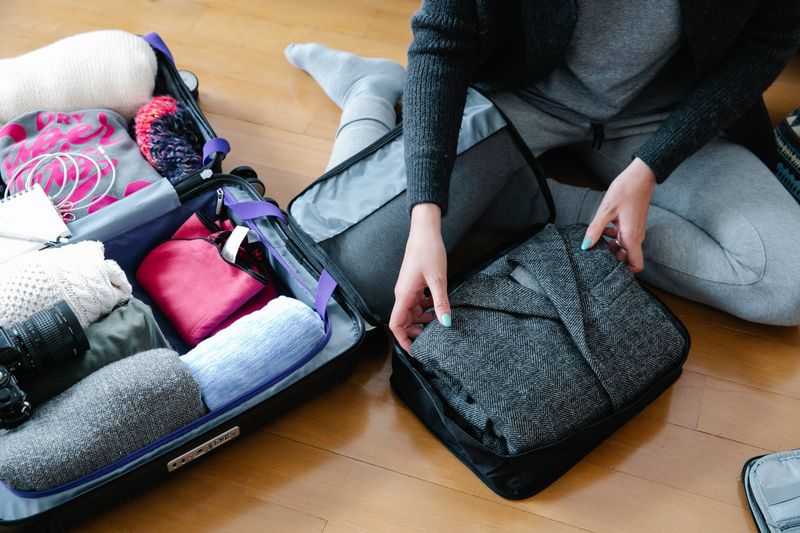
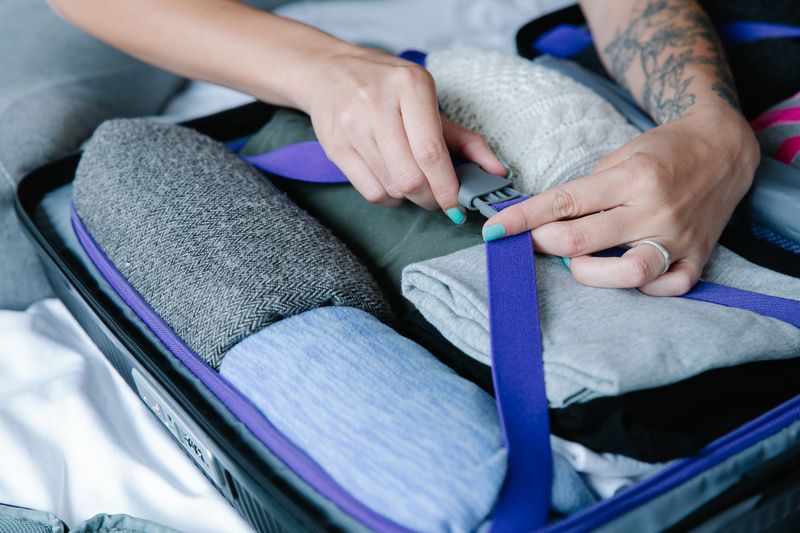
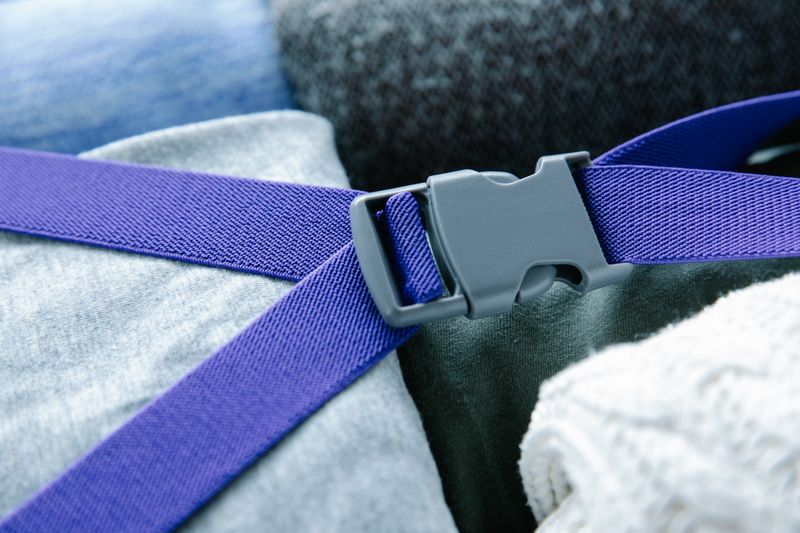
Roll-top compression sacks squeeze soft items hard and are the most effective option by volume removed. Compression cubes with a second zip remove some air while keeping items flat and findable, which suits clothing you will access daily. Vacuum bags remove the most air but need either a pump or a rolling technique, and the bag reinflates the moment it is punctured.
In practice, plain packing cubes compress almost nothing and exist to stop the bag becoming a single heap, which is a separate and legitimate benefit.
Shape matters more than volume at the gate
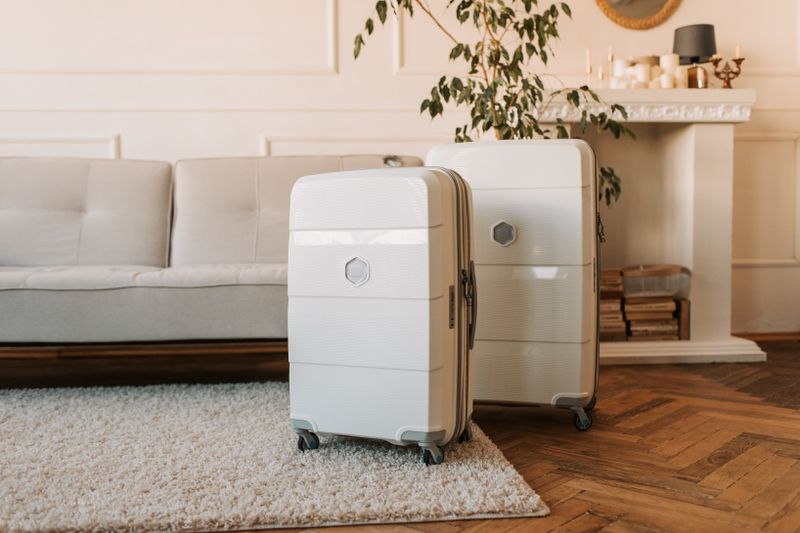
A sizer is a rigid box, so what matters is the largest dimension of your bag, not the litres inside it. Compressing contents into the middle of a soft bag lets the sides pull in and the bag pass; compressing contents inside a hard shell changes nothing about the shell. Overstuffed soft bags bulge, and a bulge in one dimension is what actually fails a sizer.
Packing the compressed blocks against the back panel keeps the profile flat rather than round.
Rolling versus folding is mostly about creases
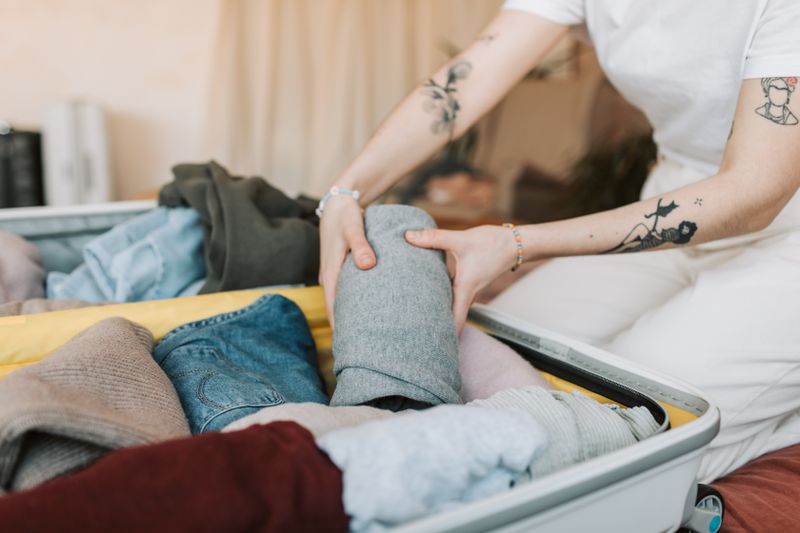
Rolling eliminates the dead air that folding leaves at the fold line and suits knits, base layers and anything that will be washed anyway. Folding along existing seams keeps shirts and tailored items presentable, which is the actual reason to fold. The bundle method — wrapping garments around a central core — creases least of the three and is slow to unpack from.
The difference between all three is small compared with removing one pair of shoes.
Border and customs rules are national and are the ones worth double-checking.
The cost side
Every compression system adds its own weight and its own fabric, typically a hundred to three hundred grams across a full set. Heavily compressed clothing comes out creased and, in the case of down, needs time to loft again before it insulates properly. Long-term compression of down sleeping bags and jackets degrades the fill, so they should be stored loose at home.
At the airport, use compression for the journey and unpack it at the other end rather than living out of it.
Side by side
| Consideration | What it means in practice |
|---|---|
| What is actually being squeezed | Compression removes trapped air, so it works on insulation and not on solids. |
| Volume down, weight unchanged | It reduces volume and never reduces weight. |
| Sacks, cubes and vacuum bags do different jobs | Gate sizers measure the box, so a compressed bag only helps if the bag holds its shape. |
The takeaway
Compress the fleece, not the shoes, and do not treat the space you win as an invitation.
Every kilo you leave behind pays you back at the third connection.
Questions readers ask
Do vacuum bags help with airline weight limits?
No. They remove air, which has negligible mass. They only help where the constraint is size.
Are packing cubes worth the extra weight?
For organisation, usually. For space, only the compression versions do anything, and only on soft items.