Packing
Why the bag weighs more on the way home
The return leg is where allowances are breached, and the reason is structural rather than a failure of discipline.
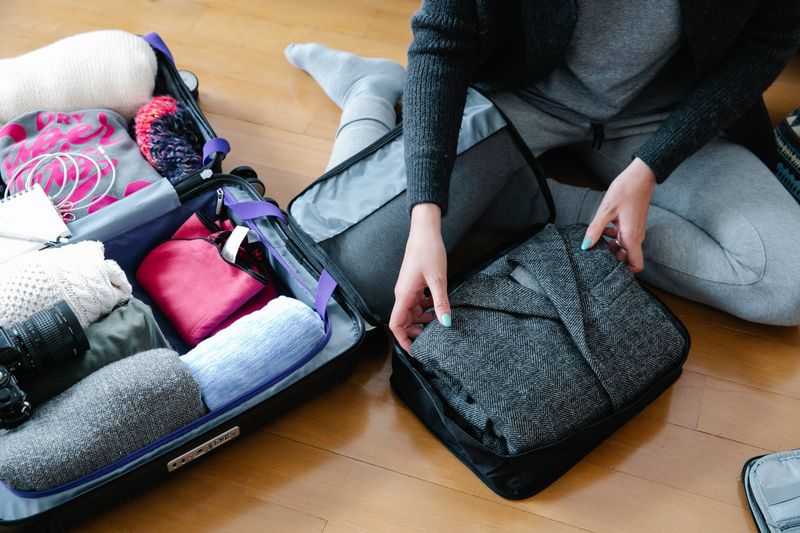
What follows is an argument about the return-leg weight problem, and about where the received version of it stops being true.
The argument in brief
- Consumables were the slack in the outbound bag, and they are gone by the return.
- Allowances on the return leg are often set by a different carrier or fare.
- Shipping is frequently cheaper than excess baggage bought at the desk.
Accumulation only runs one way
Nothing arrives in your bag on the outbound leg, and several things arrive during the trip: gifts, documents, packaging, the jacket you bought because it rained. Meanwhile the outbound bag contained consumables — toiletries, snacks, medication, laundry detergent — that were quietly acting as your weight margin. By the return, the margin has been spent and the additions have not, which is why a bag that weighed comfortably under can weigh over on identical contents logic.
Packing to exactly the limit on departure therefore guarantees a problem on return, and the fix is to leave a deliberate margin outbound.
The return allowance may not be the outbound one
On itineraries combining two carriers, each leg is governed by the rules of the carrier operating it, and cabin allowances differ substantially between them. Fare types bought separately in each direction can carry different checked allowances even on the same airline. Some markets also apply different rules on domestic versus international sectors of the same trip.
Reading the allowance for each leg rather than for the booking as a whole takes a minute and prevents the expensive version of this discovery.
Excess baggage is priced to punish
Excess charged at the airport desk is generally the most expensive way to move weight anywhere, and it is priced that way deliberately. Adding a checked bag online in advance is usually far cheaper than adding the same bag at check-in, and cheaper again than paying per kilogram over. For anything bulky and non-urgent, a postal or courier service to your home address frequently costs less than the airline excess for the same weight.
Compare the two before you queue, not after you have been weighed.
What you buy has rules of its own
Food, alcohol, plant material and animal products are the categories most often seized at borders, and the rules vary sharply by destination country. Duty and personal import allowances are separate from baggage allowances, and exceeding them is a customs matter rather than an airline one. Liquids bought as gifts are subject to cabin restrictions unless checked or bought airside in a sealed bag.
Checking the destination country's import rules before buying is easier than arguing about it at arrivals.
Design the return into the outbound bag
A packable duffel that folds to the size of a paperback converts an overweight problem into a second cabin bag or a cheap checked one. Wearing the heaviest boots and jacket on both legs moves several kilograms out of the measured bag at no cost.
At the airport, posting home documents, conference material and paperwork is almost always worth it, because paper is dense and rarely urgent. The general principle is to arrive with roughly a fifth of your capacity unused.
Weighing before you leave the room
A luggage scale weighing under a hundred grams removes the entire category of surprise at the desk. Hotel bathroom scales work if you weigh yourself, then yourself holding the bag, and subtract.
On a long trip, airport scales are calibrated differently and can read slightly high, so leave a small margin rather than aiming for the exact limit. Knowing the number before you arrive lets you redistribute into a carry-on while you still have a table and privacy.
The takeaway
Leave a fifth of the bag empty on the way out. That space is the return leg.
Pack for the trip you are actually taking, not the one in the photographs.
Questions readers ask
Is excess baggage cheaper if I pay online after check-in opens?
Usually yes. Most airlines price added bags lowest at booking, higher online later, and highest at the airport. The gap is often large.
Can I move weight into my carry-on at the desk?
Often, but cabin bags have their own limits and some carriers weigh them. It works better as a small adjustment than as a plan.