Packing
What a personal item actually measures
The second bag is the most misunderstood allowance in aviation, and on strict carriers it is the only free one.
Most explanations of the personal item allowance stop at the point where it starts to matter. This one carries on.
The short version
- The personal item is defined by the space under the seat in front, which varies by aircraft.
- On many low-cost carriers it is the only bag included in the base fare.
- Published dimensions are enforced by a sizer at the gate, not by judgement.
It is a volume defined by furniture
The personal item allowance exists because there is a fixed gap under the seat in front, bounded by the seat legs and the crossbar. That is why the permitted dimensions are shallow and wide rather than a scaled-down suitcase shape. The gap differs between aircraft types and between seats on the same aircraft, particularly in bulkhead and exit rows where there is no seat in front at all.
Airlines publish a single figure because they must, not because the space is uniform.
On strict carriers it is the whole allowance
Several low-cost airlines include only a personal item in the base fare and charge separately for a cabin bag that fits the overhead locker. This changes the packing problem entirely: the constraint is a small underseat box rather than a modest suitcase. It is also why the same fare can look dramatically cheaper than a competitor until the bags are added.
Nine times in ten, comparing fares without adding the bag you actually intend to bring compares two different products.
Gate sizers are the real rule
A sizer is a rigid frame, and the test is binary: the bag goes in unaided or it does not. Bags sold as compliant with a given airline are frequently measured without wheels, handles or external pockets, all of which count. Soft-sided bags with a flat profile pass situations that rigid or bulging bags fail, because the frame does not care about litres.
Enforcement tightens noticeably on full flights, which is exactly when you have least room to argue.
Packing the underseat bag well
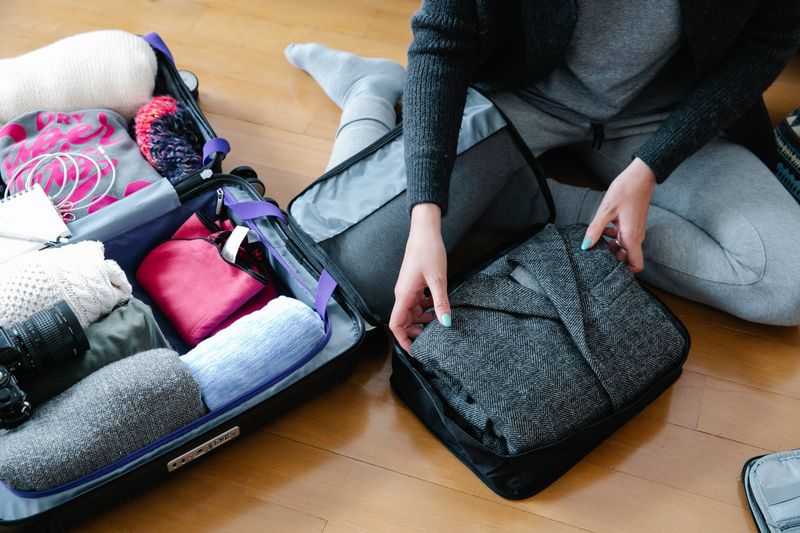
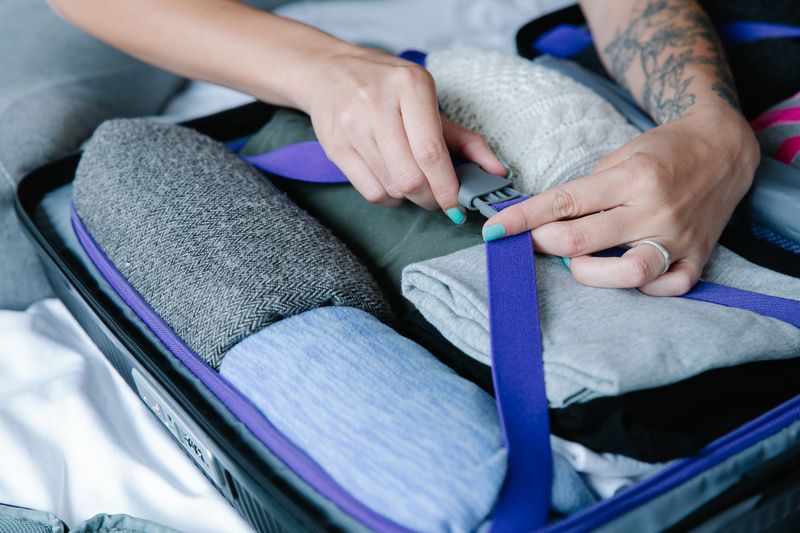
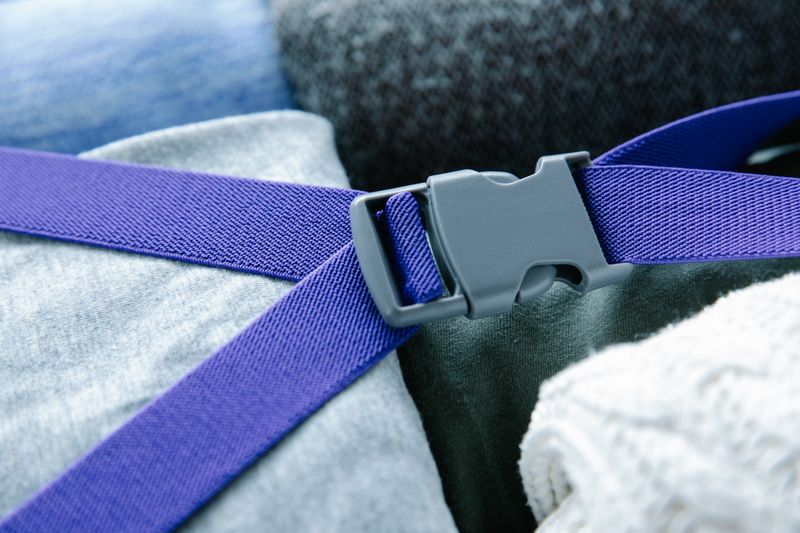
Load it in flat layers with the heaviest items against the back panel, because a bag that keeps a rectangular profile fits a rectangular frame. External water bottle pockets are the most common reason an otherwise compliant bag fails, since they add depth at the widest point. A bag that can be compressed by external straps gives you a margin at the gate that a fixed-shape bag does not.
Keep documents and anything needed in flight in an outer pocket, because the bag lives under the seat and is awkward to retrieve.
What the allowance is worth to a one-bag traveller
Used properly, the personal item holds electronics, documents, medication and a day's essentials, freeing the main bag for clothing only. That split also means the valuable and irreplaceable items stay with you if the main bag is gate-checked. Gate-checking is common on full flights and on smaller aircraft, and it happens at short notice.
At the airport, assume any overhead bag may be taken from you at the door, and pack accordingly.
Allowances vary by fare class more than by airline.
Rules vary and change
What counts as a personal item — a handbag, a laptop bag, a duty-free purchase, a coat — differs by airline and sometimes by country. Some jurisdictions have moved to regulate cabin bag charges, and the position is unsettled and varies by region.
Medical equipment and infant items are usually additional to the allowance, but the conditions differ. Read the specific carrier's current page before flying rather than relying on what was true last year.
The takeaway
Measure the bag with the wheels, the handles and the bulge. That is what the frame measures.
The trip goes better when the bag is boring.
Questions readers ask
Does a coat count as a personal item?
Usually not, on most carriers. Coats and small duty-free purchases are typically additional, but a few airlines count everything, so check.
Can I put my personal item in the overhead locker?
Often you can when there is space, but you may be asked to move it under the seat so that paid cabin bags fit above.
Also by Nadia Halloran
- Jet lag has a direction, and that changes what worksTravel Routine
- Rail passes are usually the wrong answer, and sometimes the right oneTrains & Ground
- Hostels, guesthouses and the middle nobody booksWhere You Sleep
- Doing laundry on the road is a planning decisionTravel Routine