Packing
Packing cubes are an index, not a compressor
Cubes earn their place by making a bag searchable and repackable rather than by saving space, which is why the number of them matters more than their size.
Packing cubes are usually sold on the promise of fitting more in. Their real function is organisational, and judging them on volume saved leads to buying the wrong ones.
A bag without structure is a stack
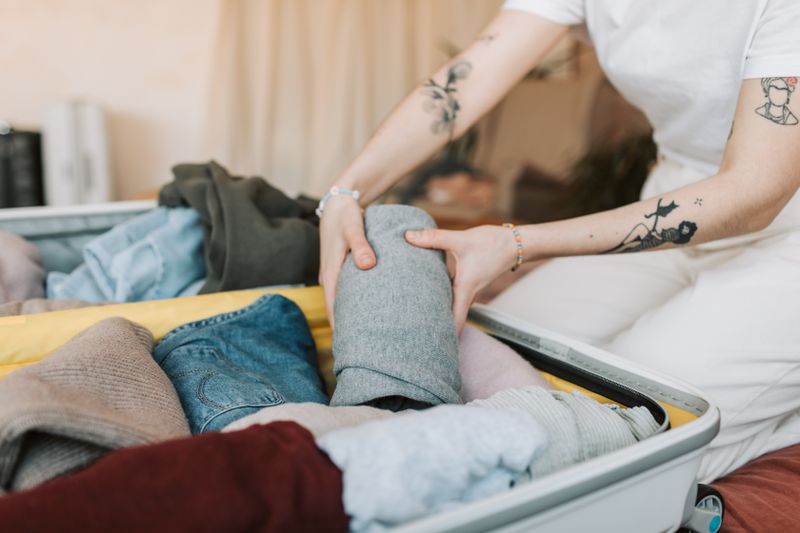
Loose clothing in a case behaves as a single mass. Retrieving something from the bottom disturbs everything above it, and the bag has to be rebuilt afterwards.
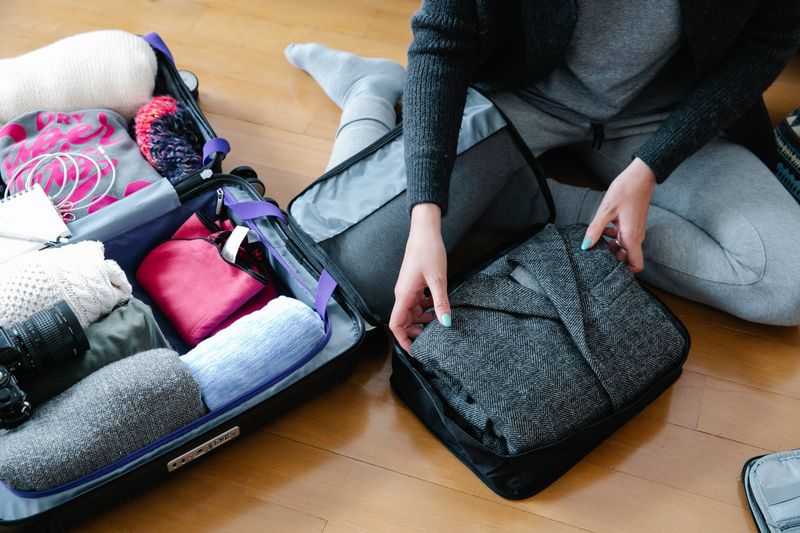
Cubes convert that mass into discrete units. Removing one leaves the rest undisturbed, which is the difference between opening a bag and unpacking it.
For a trip with several stops, this is the property that matters. The cost of disorder is paid every time the bag is opened, not once.
Volume saved is close to zero
Fabric in a cube occupies roughly the volume it occupied loose, minus a little air. The cube itself adds material and seams, which offsets much of that.
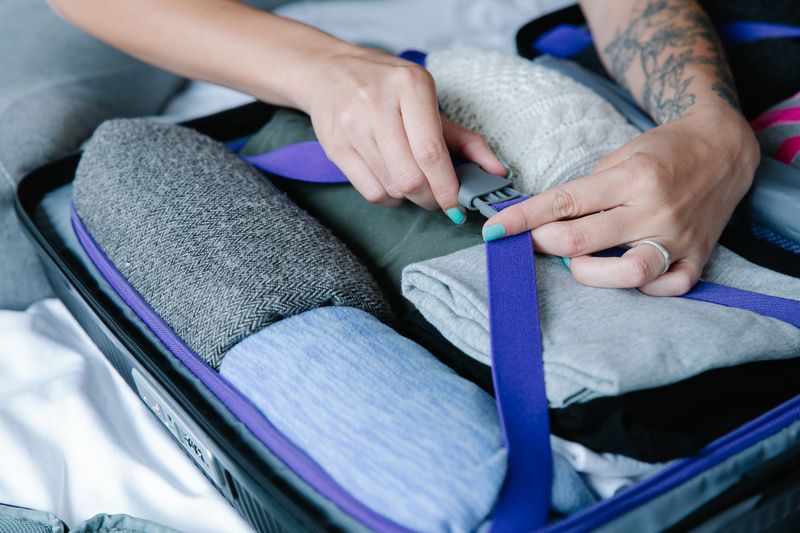
Compression cubes with a second zip do reduce volume, but by expelling air from between garments rather than from within them. Dense items compress almost not at all.
The honest expectation is a modest gain in a bag full of soft layers and no gain in one containing shoes, books or electronics.
Cubes make a bag rectangular
A case is a rectangular volume and clothing is not. Cubes force soft items into a shape that fills corners, which is where usable space is actually lost.
This is why several small cubes usually pack better than two large ones. Small units tessellate around fixed objects; large units leave gaps they cannot reach into.
The gain is largest in a hard case, whose walls do not flex, and smallest in a soft holdall that already deforms around whatever is put inside it.
The categories should match how the bag is used
Splitting by garment type is the common approach and often the wrong one, because a traveller rarely needs all their shirts at once.
Splitting by occasion or by leg of the trip means one cube comes out for two nights and the rest stays sealed, which suits a multi-stop itinerary.
A dedicated cube for worn clothing is the addition that does the most work, since it keeps the laundry problem contained rather than distributed through the bag.
Where cubes are the wrong tool
In a soft backpack without a clamshell opening, cubes fight the bag's shape and make access worse, because the pack is loaded vertically rather than laid flat.
A drawstring sack works better there, since it deforms to the space available. The organising principle survives; the rigid rectangular form does not.
Questions readers ask
Should I use a packing app?
Any tool works if you open it. The mechanism that matters is reviewing after the trip, not the format of the list.
How do I stop forgetting the same thing?
Add it to a standing list the moment you notice, at the destination rather than at home, while the memory is still specific.