Packing
Lithium batteries travel in the cabin for a reason
Rules requiring power banks and spare cells in hand luggage exist because a battery fire in an accessible cabin can be dealt with and one in the hold cannot.

Batteries are the most heavily regulated ordinary item in a bag. The rules are consistent across airlines because they follow international dangerous goods provisions rather than company policy.
Thermal runaway is the failure being managed
A damaged or defective lithium cell can enter a self-sustaining reaction that generates its own heat and oxygen, raising the temperature until neighbouring cells fail in turn.
The reaction is difficult to extinguish because removing external oxygen does not stop it. What works is cooling, applied continuously and close to the cell.
That requires a person with access to the device, which is available in a cabin and not available in a hold during flight. The whole rule follows from this.
Spare cells are treated differently from installed ones
A battery inside a device is protected by the device's own circuitry and casing. A loose cell or power bank can short against keys, coins or another battery.
This is why spares must travel in the cabin with their terminals protected, in original packaging or with tape over the contacts, while the device itself may sometimes be checked.
Capacity thresholds apply above certain sizes, with larger batteries requiring airline approval and the largest prohibited entirely from passenger aircraft.
Power banks have their own restrictions
A power bank is a spare battery with a case, so it is subject to the spare-battery rules regardless of how it is described by the manufacturer.
Several airlines additionally restrict using or charging them in flight, and require them to be kept where crew can reach them rather than in an overhead locker.
Capacity is usually printed in watt-hours on the casing, and where it is not, the item is harder to assess at a security check and more likely to be refused.
The rules follow the item, not the journey
Because the provisions are international, they apply on a domestic sector of an international trip and on a connecting airline that was booked separately.
Individual carriers may be stricter than the baseline but not more permissive, so checking the operating airline rather than the ticketing one gives the applicable answer.
What this means when packing
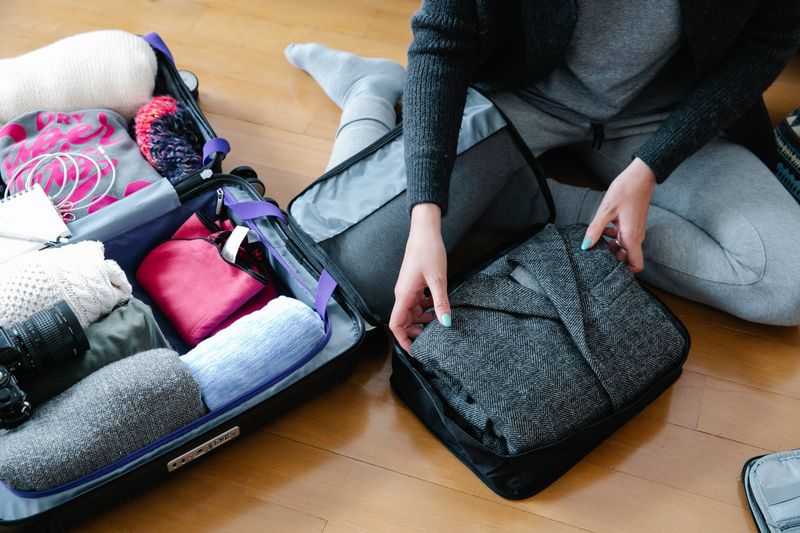
The practical rule is that anything storing electrical energy travels in the bag that stays with you, which includes power banks, spare camera cells and battery-powered luggage.
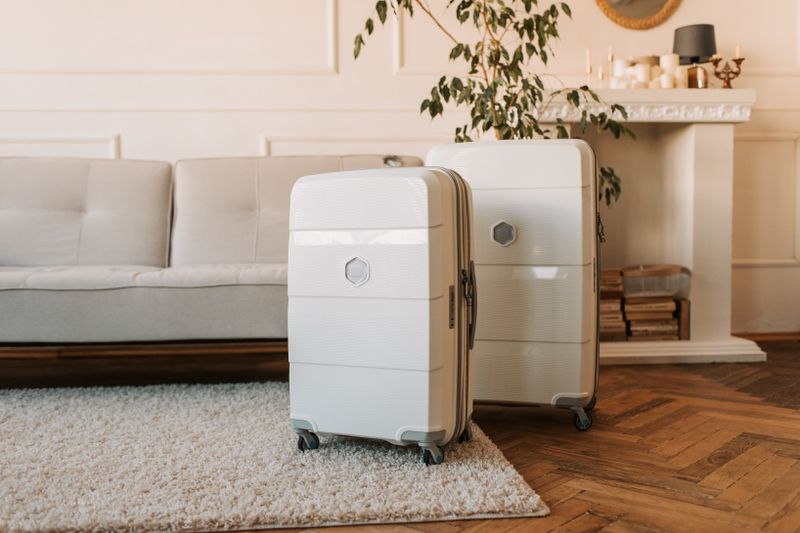
Smart suitcases with fixed batteries are the awkward case, since a bag that cannot have its battery removed may be refused for the hold and is too large for the cabin.
Questions readers ask
Should I use a packing app?
Any tool works if you open it. The mechanism that matters is reviewing after the trip, not the format of the list.
How do I stop forgetting the same thing?
Add it to a standing list the moment you notice, at the destination rather than at home, while the memory is still specific.