Packing
Cold-Weather Packing Is A Problem Of Trapped Air
Insulation works by holding still air near the body, which explains why several thin layers outperform one thick coat and why compression in a bag is not free.

Warmth in clothing comes from air, not from fabric. Every practical decision about packing for cold follows from that single mechanism.
Fabric is a structure for holding air
Still air conducts heat poorly, so a garment keeps a wearer warm by trapping a layer of it against the skin and preventing it from being carried away.
Down and synthetic fills do this by creating a lofted structure full of small pockets. The fibers themselves contribute little; the space between them does the work.
This is why a flattened jacket is a poor insulator regardless of how much material it contains, and why loft rather than thickness is the property that matters.
Layers beat a single thick garment
Several layers create several air gaps, and the boundaries between garments add insulation that a single piece of equivalent bulk does not provide.
Layers are also adjustable, which matters because most cold-weather discomfort comes from overheating during exertion and then cooling rapidly once still.
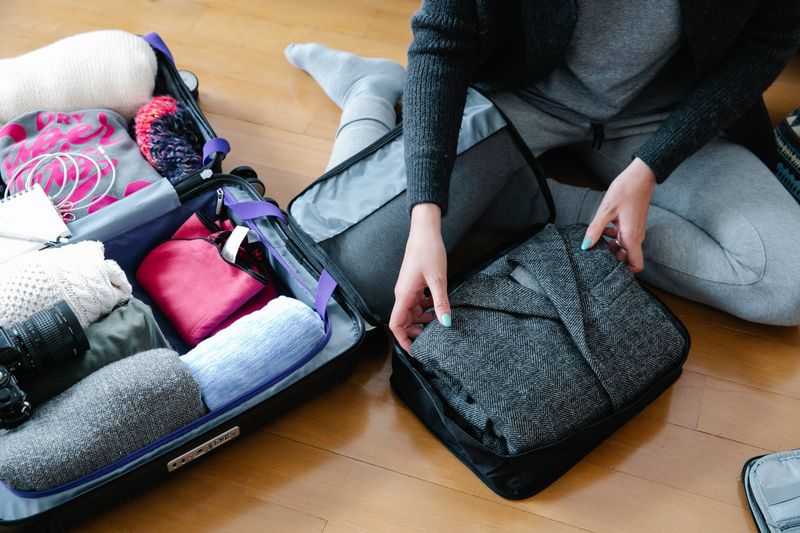
For packing, layers are more compact per unit of warmth in practice, because thin pieces fill the gaps around other items while one bulky coat dictates the shape of the whole bag.
Moisture destroys the mechanism
Water conducts heat far better than air, so a wet insulating layer stops insulating and starts drawing heat away from the body.
Sweat is the usual source rather than rain, which is why a base layer that moves moisture outward matters more than an outer layer that keeps water off.
Down loses loft when wet and dries slowly; synthetic fill retains more of its structure. That difference is the main reason to choose one over the other for a damp climate.
Compression has a cost and a limit
Insulating garments compress well, which makes them attractive to pack, but prolonged compression damages fill over time and reduces the loft it can recover.
Storing a down piece compressed for a whole trip is generally fine; storing it that way for months at home is what shortens its life.
Recovering loft also takes time, so a jacket pulled from a stuff sack should be shaken out and given a while before it is judged, particularly in cold air.
Extremities are a separate calculation
The body restricts blood flow to hands, feet and ears in the cold, so those areas cool first regardless of how well the torso is insulated.
Small items therefore deliver disproportionate warmth per unit of packed volume, and they are the last things worth cutting from a bag.
Footwear is the exception, because a boot tight enough to compress a thick sock restricts circulation and makes the foot colder than a thinner sock would.
Questions readers ask
Should I use a packing app?
Any tool works if you open it. The mechanism that matters is reviewing after the trip, not the format of the list.
How do I stop forgetting the same thing?
Add it to a standing list the moment you notice, at the destination rather than at home, while the memory is still specific.