Packing
Clothes That Must Arrive Uncreased Travel On Structure
Creases form where fabric is folded under pressure and left, so keeping tailored clothing presentable is about controlling where the folds fall rather than about the folding method.
A suit that arrives creased was not packed badly so much as packed without structure. Understanding how a crease forms explains what actually prevents one.
A crease is set by pressure and time
Folding a fabric puts fibers on the outside of the bend under tension and the inside under compression. Left under load, they take on that shape.
Heat and moisture accelerate the process, which is why a bag in a hot hold or a humid cabin produces sharper creases than the same bag in a cool car.
The variables a traveler controls are therefore where the folds fall, how much weight sits on them, and how long they stay there.
Structured garments have grain and seams
A tailored jacket is built around canvas and shaped seams, and it resists deformation along those lines while creasing readily across them.
Folding along a seam, such as turning a jacket inside out at the shoulders, works with that structure and produces folds the garment is designed to absorb.
Folding across the chest or through the lapel does the opposite, and those creases sit in the most visible part of the garment and are the slowest to fall out.
Interleaving spreads the bend
A fold made around another object has a larger radius than a fold made against itself, and a larger radius distributes the strain over more fibers.
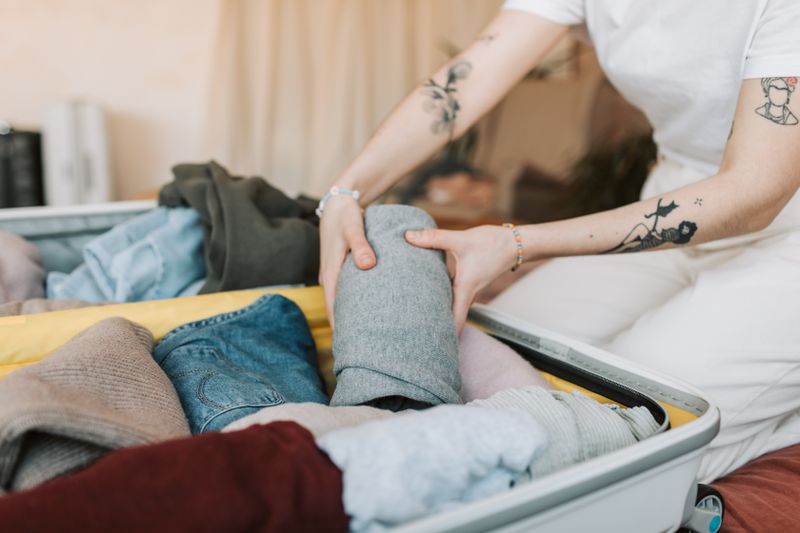
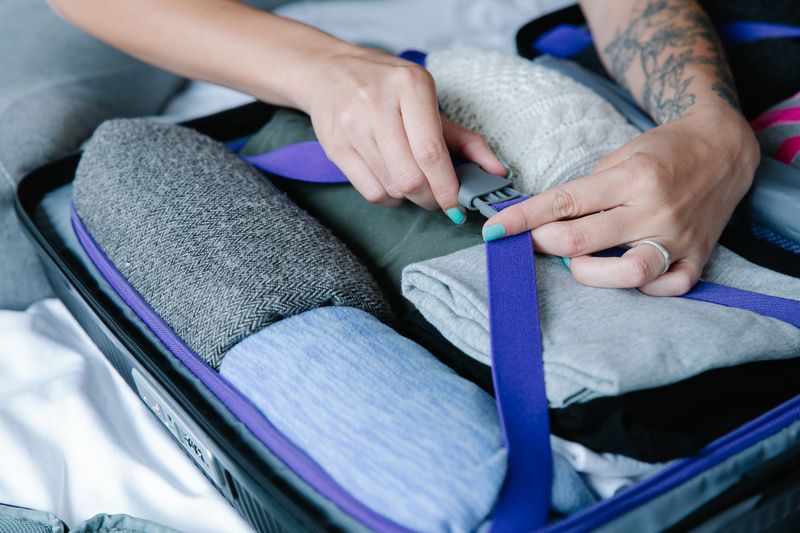
Placing soft items inside a fold, or wrapping garments around a bundled core, converts a sharp crease into a gentle curve that recovers on hanging.
Tissue or a thin plastic layer between garments does the same by reducing friction, letting fabric slide slightly rather than locking into a shape.
Position in the bag matters more than technique
Anything at the bottom of a packed case carries the weight of everything above it, and that pressure is what fixes a fold into a crease.
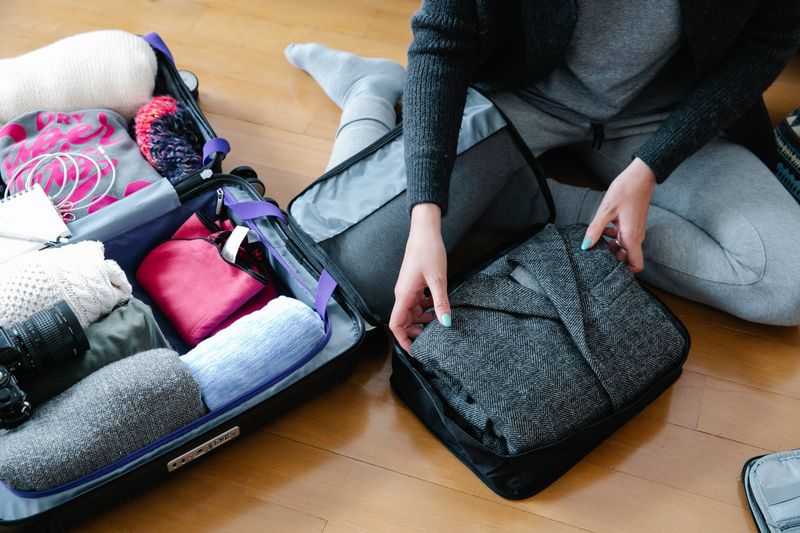
Tailored pieces belong on top, laid flat and last, where nothing compresses them and they can be lifted out first on arrival.
A bag packed loosely enough to shift is worse than a firmly packed one, because movement works fabric against fabric for the whole journey.
Recovery is easier than prevention
Most creases in wool relax when the fibers regain moisture, which is why hanging a garment in a steamy bathroom is effective and requires no equipment.
Time on a hanger does much of the work by itself, so unpacking immediately on arrival is worth more than any packing method used earlier that day.
Synthetic blends resist creasing but also resist recovery, so a crease set into them tends to need heat rather than patience to remove.
Questions readers ask
Should I use a packing app?
Any tool works if you open it. The mechanism that matters is reviewing after the trip, not the format of the list.
How do I stop forgetting the same thing?
Add it to a standing list the moment you notice, at the destination rather than at home, while the memory is still specific.