Packing
Camera Gear Packs Around The Lens
Lenses are the heavy, fragile and irreplaceable part of a camera kit, so the packing decisions that matter are about protecting glass and mounts rather than the camera body.
A traveling camera kit is usually planned around the body, which is the wrong center of gravity. Lenses drive the weight, the fragility and the cost of the whole arrangement.
Weight concentrates in glass
Optical elements are dense, and a fast lens is heavy because its front element is large. Two or three lenses routinely outweigh the body they attach to.
That means the realistic constraint on a kit is not how many bodies travel but how many lenses, and each additional one changes what the bag feels like after an hour.
Cutting a lens saves more weight than any other decision available, which is why the honest question is which focal lengths were actually used on the last trip.
The mount is the vulnerable joint
A body with a heavy lens attached hangs its weight on a small mechanical interface, and an impact transmits through that joint rather than through the housing.
Packed assembled, the pair acts as a lever whenever the bag is dropped or set down hard, so separating them for transport removes the main structural risk.
Caps on both sides also keep the sensor and rear element protected, and a rear element scratch is functionally the same as a damaged lens.
Padding works by preventing contact
Damage happens when two rigid objects meet, so the purpose of padding is separation rather than cushioning in any general sense.
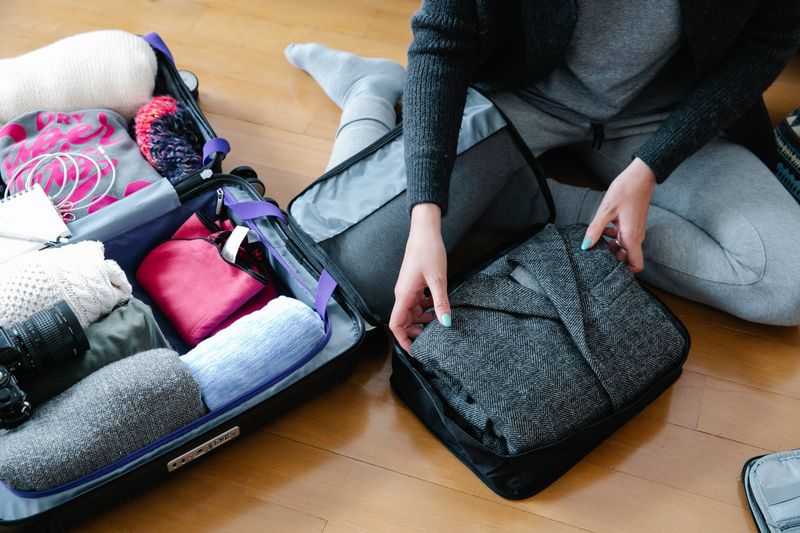
Dividers that hold each item in its own space achieve that; loose foam in a shared compartment does not, because items migrate and end up touching.
Filling voids so nothing can move is the same principle applied to a bag that is only partly full, and it matters more than the thickness of any single pad.
Temperature and moisture are slower risks
Moving cold equipment into warm humid air condenses water on and inside the lens, and that moisture can persist between elements where it cannot be wiped away.
Letting gear warm inside a closed bag before opening it is the standard prevention, because condensation forms on the coldest available surface.
Silica packets help with ambient humidity over a long trip, though they do nothing about a rapid temperature change and should not be relied on for it.
Power and storage travel by their own rules
Camera batteries are lithium cells and belong in the cabin with their terminals protected, since a short circuit between loose batteries is the hazard being managed.
Memory cards are small enough to lose and expensive enough to matter, so a dedicated case that shows at a glance which are full is worth its space.
Copying cards to a second device each evening is the only real protection for the images, because no packing decision protects against a bag that is simply gone.
Questions readers ask
Should I use a packing app?
Any tool works if you open it. The mechanism that matters is reviewing after the trip, not the format of the list.
How do I stop forgetting the same thing?
Add it to a standing list the moment you notice, at the destination rather than at home, while the memory is still specific.