Packing
A travel wardrobe works on one colour decision
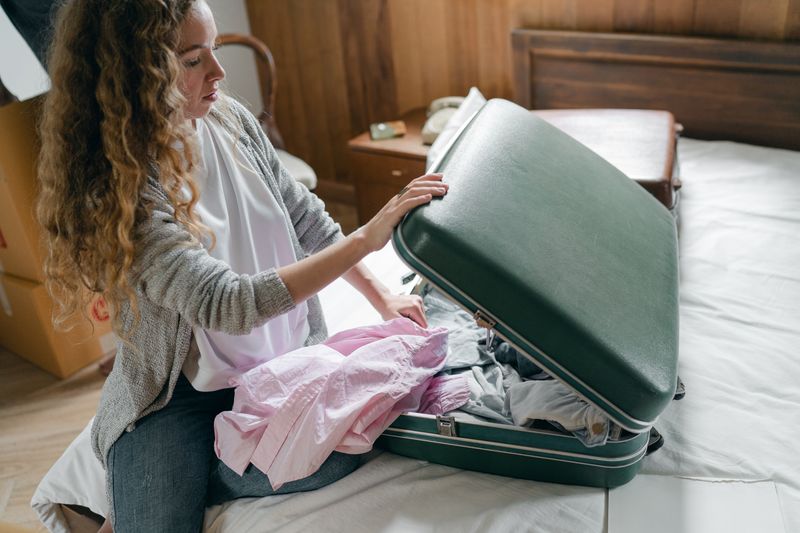
Limiting a trip's clothing to a single neutral base and one accent means every item combines with every other, which reduces the number of garments needed.
The size of a bag is decided less by the number of garments than by how many of them work together. Colour is the constraint that determines that.
Combinations, not items, decide sufficiency
Ten garments that all coordinate produce far more usable outfits than fifteen that do not. The useful measure is combinations available, not pieces carried.
A garment that pairs with only one other is effectively part of a single outfit, occupying volume for one wearing regardless of how versatile it seemed at home.
Choosing a base colour and requiring every item to work with it removes those single-use pieces at the planning stage rather than at the end of the trip.
Neutrals do the structural work
A base of one or two neutral tones for trousers, outer layers and shoes means the largest and heaviest items are automatically compatible with everything else.
Those items are also the ones least likely to be washed mid-trip, so their ability to be worn repeatedly without looking repetitive matters more than for lighter layers.
The accent colour then sits in the small, light items: a shirt, a scarf, a jumper. Variation comes from the parts of the bag that cost the least volume.
Patterns limit repeatability
A strongly patterned garment is memorable, which is exactly the problem in photographs and in a work setting where the same trip produces several occasions.
Plain items can be worn repeatedly without drawing attention, which is what allows a small wardrobe to cover a long trip rather than only a weekend.
Texture does the job a pattern was meant to do without the same cost, since a ribbed knit or a linen weave reads as variation while still combining with everything else.
Laundry pulls in the same direction
Washing on the road works best when the items being washed are similar in colour and fabric, because they can go through one cycle without separating loads.
A single-palette wardrobe means a hotel sink or a launderette handles the whole bag at once, which turns laundry into a task of an hour rather than a day.
It also removes the risk that a dark item ruins a light one, which is the usual reason a traveller ends up with fewer usable clothes than they packed.
The decision is made before packing starts
Choosing the palette while looking at the trip, rather than while looking at a wardrobe, prevents the familiar drift where each individually reasonable addition breaks the scheme.
The test for any candidate item is whether it works with at least two others already selected. Anything that fails is not underpacked, it is simply outside the system.
Questions readers ask
Should I use a packing app?
Any tool works if you open it. The mechanism that matters is reviewing after the trip, not the format of the list.
How do I stop forgetting the same thing?
Add it to a standing list the moment you notice, at the destination rather than at home, while the memory is still specific.