Packing
Rolling versus folding is the wrong argument
Both methods move roughly the same volume of cloth. What changes is the shape of bag they suit, and how the clothes look when you arrive.

This is written to be used rather than admired. Each section below is a decision about packing methods, and each one has a default.
Before you start
- Rolling suits soft irregular bags; folding suits flat rectangular cases.
- Creasing is a property of the fabric far more than of the method.
- Real volume savings come from what you leave out, not how you arrange it.
What rolling actually does
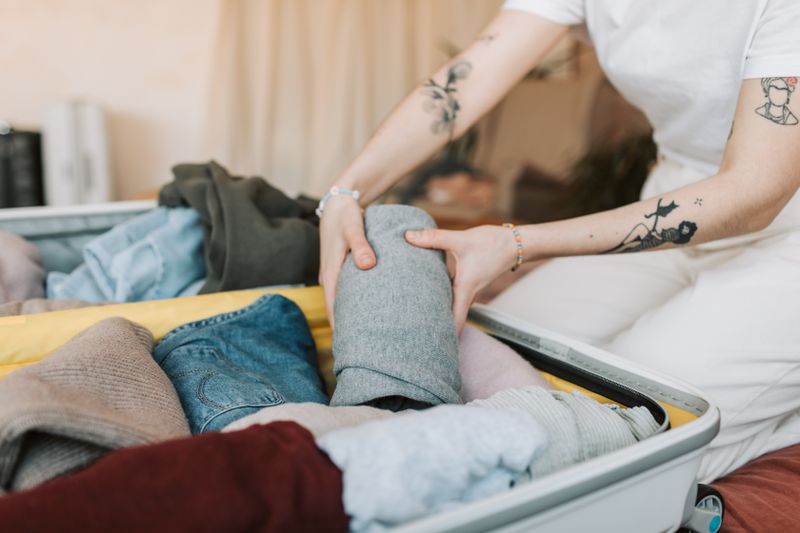
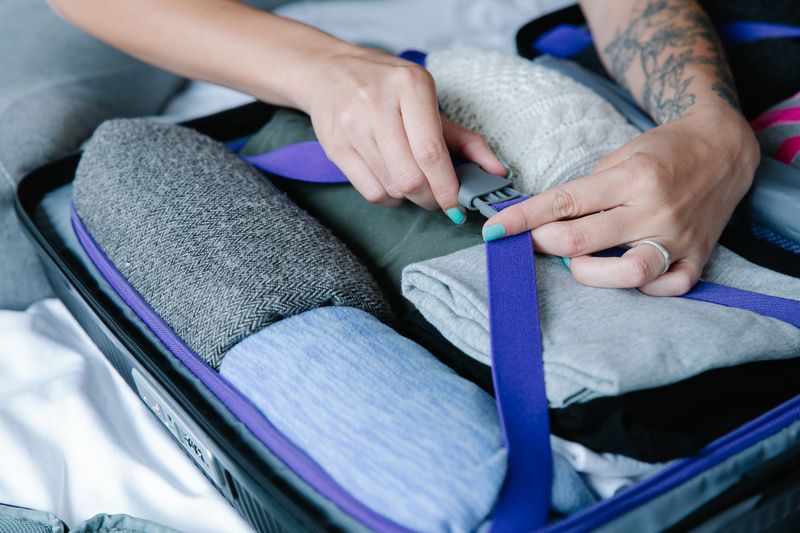
Rolling turns a flat garment into a cylinder, and cylinders fill odd-shaped soft bags without leaving the corner gaps that flat stacks create. A roll holds its own shape, so the pile does not slump when you pull one item out from underneath it.
Tightly rolled cotton emerges with fine creases running the length of the garment rather than one hard line across the middle. Rolling is slower to do and slower to undo, which matters on a trip with many one-night stops and repeated repacking. It works best for knitwear and jersey that already resist a sharp crease, and worst for tailored items with structured seams.
What folding actually does
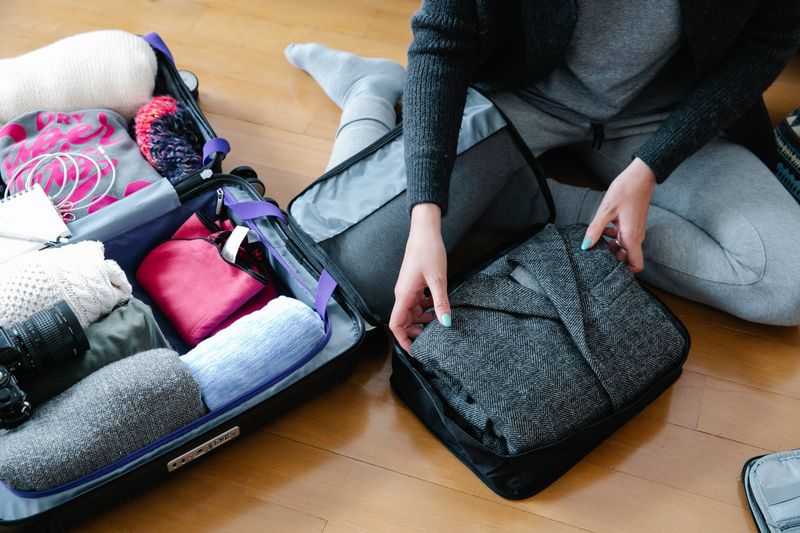
Folding produces flat rectangles that stack into a rectangular case with almost no wasted air between the layers. A garment folded along its existing seams keeps creases where the maker intended them, which is why shirts leave a shop folded rather than rolled. The stack is fragile in a soft bag, because removing anything from the middle collapses everything resting above it.
Nine times in ten, folding is fast, repeatable and easy to reverse, which is why most people revert to it after a few days of rolling. It suits shirts, trousers and anything with a defined front that you want to hang up immediately on arrival.
The bag decides the method
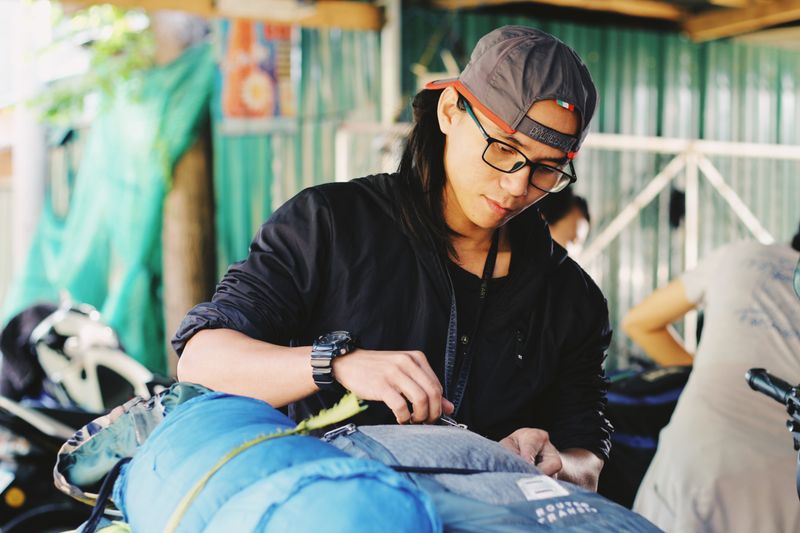
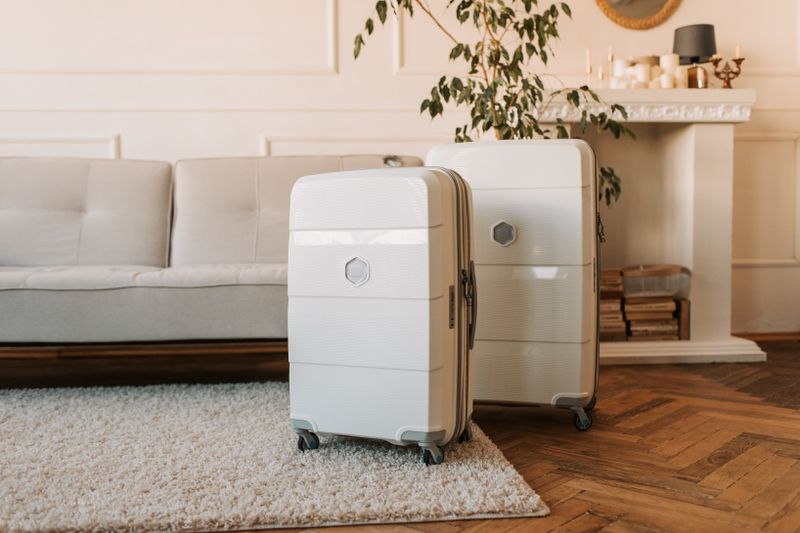
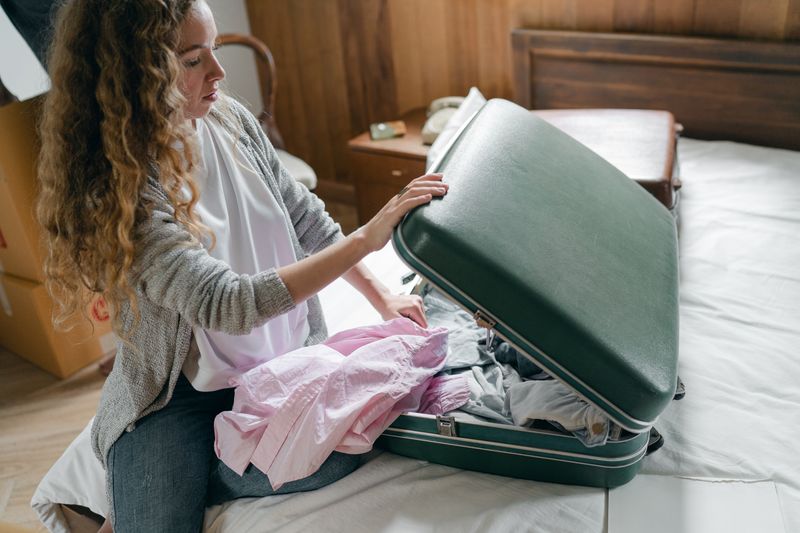
A hard-shell case is a rectangle with a hinge, so flat stacks use its volume almost perfectly while rolls leave gaps at the edges. A soft top-loading rucksack has curved sides and a tapering base, where rolls and small bundles fill the shape and stacks refuse to.
Mixing the two is normal: fold the flat items into the lid side and roll everything else into the deep side. The working rule is that the method should match the geometry of the space rather than a principle you read somewhere. This is why identical advice produces opposite results for two travellers carrying different bags on exactly the same trip.
Creasing is a fabric property
Creases form when fibres are bent under pressure and held there long enough to take a set, which happens faster with heat and moisture present. Cotton and linen crease readily because their fibres deform and stay deformed, while wool and most synthetics spring back on their own.
The working rule: a garment packed slightly damp will crease harder than the same garment packed dry, regardless of how carefully it was folded. Hanging a creased item in a steamy bathroom relaxes the fibres and removes most of it within about twenty minutes.
If a fabric creases badly then no packing method will rescue it, so the honest fix is to choose different fabrics.
Where the volume actually goes
Clothing is rarely what fills a bag; shoes, a jacket, a toilet bag and electronics take the space and none of them fold. Squeezing another small percentage out of a shirt stack achieves nothing while a second pair of shoes is still in the bag.
On a long trip, air trapped inside shoes, hoods and rolled towels is recoverable, and stuffing socks into shoes is worth more than any folding argument. Compression only helps where there is air to remove, which means knitwear and jackets rather than shirts already lying flat. The productive question is which items are in the bag at all, not how those items are arranged once they are.
A method that survives the trip
Whatever you choose has to be repeatable at the end of a long day, in a dim room, on a bed covered in your belongings. Bundling, where garments are wrapped around a soft core, packs beautifully and is abandoned by almost everyone by the third night.
On a long trip, grouping by category into pouches means you open one pouch rather than the whole case at each stop. The single habit worth keeping is a closed bag for worn clothing, which stops the clean and dirty piles merging by the fourth day. Judge any method by how the bag looks on the last morning of a trip rather than the first.
The takeaway
Match the method to the shape of the bag, and put the effort into what you leave behind.
Every kilo you leave behind pays you back at the third connection.
Questions readers ask
Does rolling really save space?
Marginally, and mostly in soft bags with irregular shapes. In a rectangular case, flat folding usually wins on pure volume.
Are packing cubes worth it?
They organise rather than compress, unless the cube has a compression zip. The gain is finding things without unpacking everything else.