Airports & Flying
Same-day changes and standby: flexibility you may already own
Airlines sell rigid tickets and then run a set of quiet mechanisms for moving people between flights, and some of them are cheap.
There is a settled way of talking about changing a flight on the day. It is worth asking how much of it survives contact with the detail.
The argument in brief
- Same-day change and standby are separate products with different costs and certainty.
- What is permitted is set by the fare rules, not by the airline in general.
- Irregular operations relax normal rules, and the flexibility is often free.
Two different mechanisms
A confirmed same-day change moves you to another flight with a guaranteed seat, usually for a fee and only if a seat is available in an eligible class. Standby places you on a list for a flight with no guarantee, and you only travel if seats remain after everyone confirmed has boarded. The first is certainty for money; the second is a free or cheap gamble that fails on full flights.
Airlines that offer both usually price them very differently, and the distinction is not always clear on the website.
The fare rules decide
Every ticket carries fare rules specifying whether changes are permitted, what they cost and whether the fare difference is charged. The cheapest fares in most markets prohibit changes entirely or make them economically pointless by charging the difference to a walk-up price. Flexible fares cost more upfront and can be worth it when your plans are genuinely uncertain, which is a calculation rather than a habit.
Status in a frequent flyer programme often waives same-day change fees, which is one of its more practical benefits.
When the airline relaxes everything
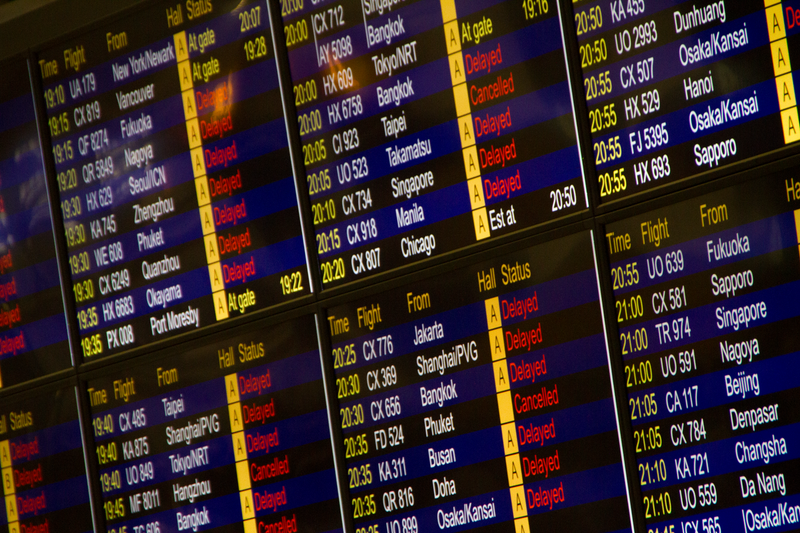
During weather events, strikes and major disruption, airlines commonly issue waivers allowing free changes across a date range and sometimes across airports. These are published on the airline's website and are frequently more generous than what the agent at the desk offers unprompted.
At the airport, knowing a waiver exists and naming it changes the conversation entirely. Waivers also frequently permit changing to a different routing, which is the valuable part when a whole region is disrupted.
Earlier flights are easier than later ones
Moving to an earlier flight on the same day is the common case and is often the cheapest change available, since the airline gains a seat on the later service. Airports with many daily frequencies on the same route make this practical; thin routes with one flight a day do not. Arriving early enough to make the earlier flight is the constraint most people fail, particularly with a bag to check.
Without a checked bag, a same-day move is dramatically simpler.
Twenty-four hour rules and cancellations
Several markets require a short cooling-off period after booking during which a ticket can be cancelled without penalty, and the details differ by jurisdiction. Where that exists, it is a genuine tool: book, confirm the rest of the trip, and cancel within the window if it does not come together. Non-refundable tickets often retain residual value as a credit rather than being worthless, with an expiry and a change fee attached.
From the queue, reading what happens to the money before you need to know is easier than reading it in a departure hall.
When not to bother
On a cheap non-refundable fare with no status and no waiver in force, the change cost frequently exceeds a new one-way ticket. Checking the price of a fresh ticket on the same route is a two-minute sanity check that people skip. On separate tickets, changing one leg without the other creates a new problem rather than solving one.
From the queue, where a connection is at risk, ask the airline to reroute you rather than buying anything, since a delay may already entitle you to it.
The takeaway
Read the fare rules once when you book, and check for a waiver before you queue.
Every kilo you leave behind pays you back at the third connection.
Questions readers ask
Can I fly standby on any ticket?
No. Standby availability is set by the airline and the fare type, and many low-cost carriers do not offer it at all. Check the fare rules rather than assuming.
Is it cheaper to change a ticket or buy a new one?
On restrictive fares, buying a new one-way is frequently cheaper than the change fee plus fare difference. Always price both.