Airports & Flying
Why the aircraft is late when the sky is clear
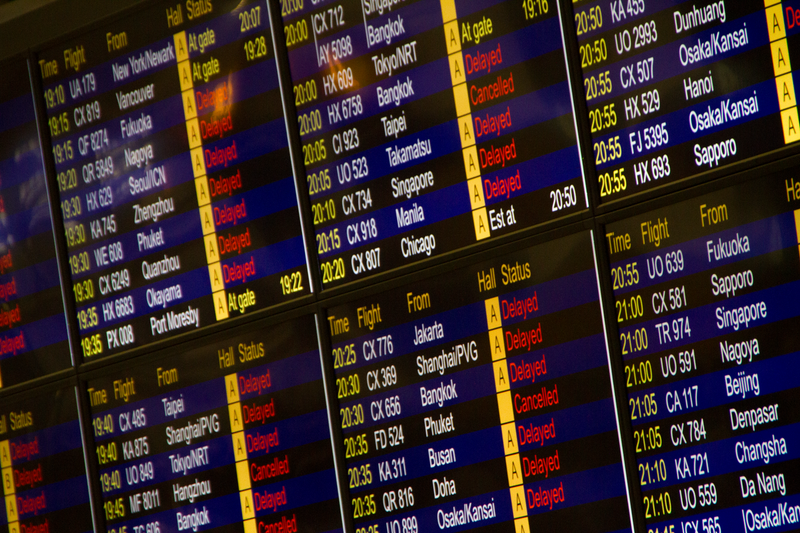
Most delays are inherited from earlier in the day, and the aircraft you are waiting for is usually somewhere else entirely.
This works through flight delays in the order the parts actually depend on each other.
The short version
- Aircraft fly several sectors a day, so a morning delay propagates until a gap absorbs it.
- Crew duty limits can ground a serviceable aircraft with willing passengers.
- Slot restrictions and ground handling are frequent invisible causes.
Delays are inherited, not generated
A single aircraft typically operates four to six sectors in a day, and each one starts where the last finished. A ninety-minute delay in the morning is still present in the evening unless the schedule contains slack, which airlines minimise because idle aircraft cost money. This is why your evening flight is delayed by weather that occurred hundreds of miles away that morning.
It is also why the first departure of the day is statistically the most reliable one to book.
Crew are a separate constraint
Flight and cabin crew operate under legally enforced duty and rest limits that cannot be extended by agreement or goodwill. A crew approaching its limit will not start a sector it cannot legally finish, so an aircraft can sit at a gate, fuelled and serviceable, waiting for a replacement crew. Reserve crews exist but are finite and are consumed quickly during widespread disruption.
The working rule: this is the mechanism behind cancellations that appear inexplicable when the weather is fine and the aircraft is visibly present.
Slots and airspace
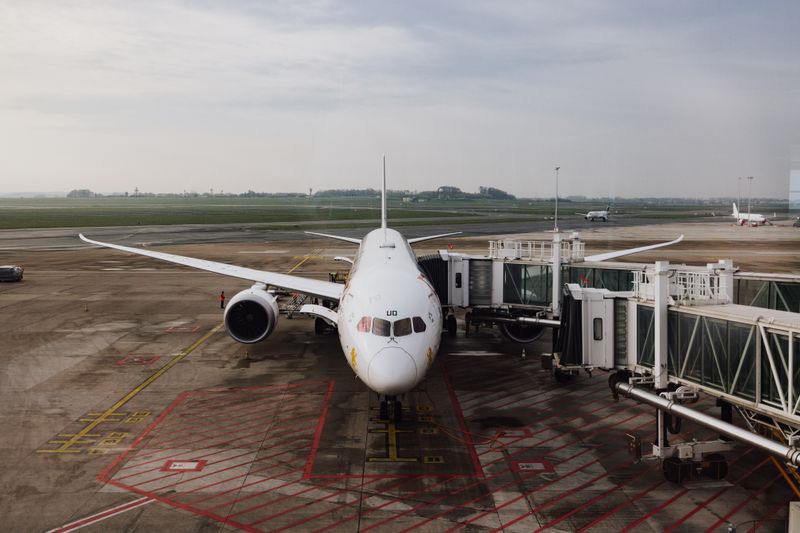
Congested airports allocate take-off and landing slots, and missing yours can mean waiting for the next available one rather than departing when ready. Air traffic flow management issues departure times to smooth arrivals at the destination, which is why aircraft sometimes wait on stand under a clear sky. Airspace closures, military activity and staffing shortages at control centres produce delays with no visible local cause.
At the airport, none of this is under the airline's control, which is also why it often falls outside compensation schemes.
Ground handling and the turnaround
A turnaround requires cleaning, catering, fuelling, baggage, boarding and paperwork to complete in sequence, and any one of them running late holds the departure. Ground handling is frequently subcontracted and thinly staffed at off-peak hours and secondary airports. Last-minute baggage offloads, required when a checked passenger does not board, can consume twenty minutes on a full hold.
These are the delays measured in tens of minutes that quietly turn a tight connection into a missed one.
Technical and the language around it
Minor technical issues are frequently resolved on stand, but anything requiring a part, an engineer or a check flight can take hours. Airlines are cautious about the wording because the cause determines whether compensation is owed, so announcements are often vague.
Asking specifically whether the aircraft has arrived, whether the crew is on board and whether a slot has been issued gets more useful answers than asking how long the delay is. Gate staff usually know the reason and are rarely asked precisely.
Airline and carrier policies differ, and they change without much notice.
Building schedules that survive it
Booking the first departure of the day, choosing direct flights and leaving generous connections are the three structural defences. Avoiding the last flight of the day removes the scenario where a cancellation means an overnight rather than a rebooking. Connecting through a hub where your airline has many daily frequencies means more rebooking options when something fails.
Flight tracking apps show where your inbound aircraft currently is, which frequently tells you about a delay before the airline announces it.
The takeaway
Book early in the day and check where the inbound aircraft is. The board is the last thing to know.
The trip goes better when the bag is boring.
Questions readers ask
How can I tell if my flight will be late before the airline says so?
Track the inbound aircraft. If the aircraft due to operate your flight has not left its previous airport, the delay is already fixed regardless of what the board says.
Are morning flights really more reliable?
Generally yes, because they begin the day with the aircraft and crew already in position, before delays have accumulated.