
Trains & Ground
Seat reservations are a separate product from the ticket
On many railways the right to travel and the right to a particular seat are sold separately. Confusing the two is how people end up standing.
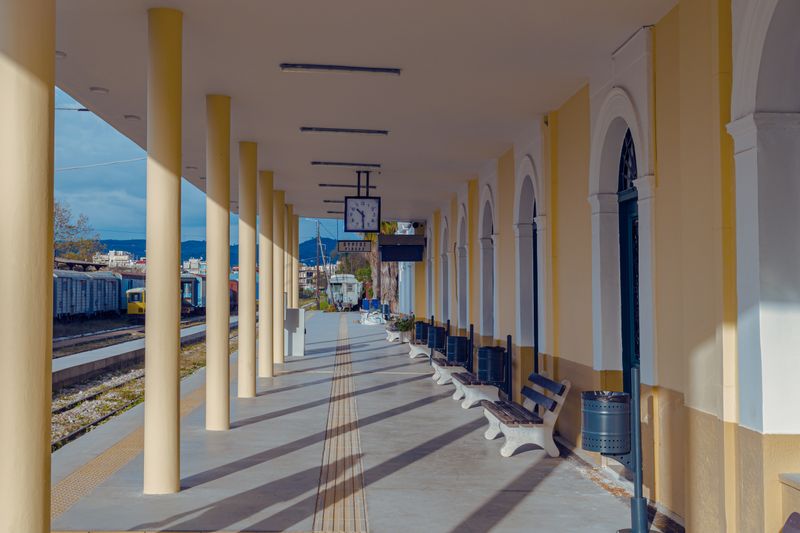
The theory of train seat reservations is well covered elsewhere. This is about the version you meet in practice.
What holds up in practice
- Some networks require a reservation, some offer one, some do not have them at all.
- A rail pass is a ticket and rarely includes a seat.
- Reservation quotas can sell out while ordinary tickets remain on sale.
Two different rights
A ticket grants the right to travel between two points, either on a defined service or within a defined period. A reservation grants the right to occupy a particular seat on a particular train, and it is priced separately in many systems.
Where reservations are compulsory, a ticket without one is not valid for that train no matter what you paid for it. Where they are optional, the ticket alone is enough and the reservation only buys certainty about where you will sit. Knowing which of those three regimes applies on a route is the single most useful fact to establish before booking.
Compulsory reservation networks
High-speed services in many countries sell a fixed number of seats and refuse boarding once those seats are gone. This makes the train reliable and pushes the fare structure closer to an airline than to a traditional railway. It also means a delay elsewhere can leave you holding a reservation for a train you can no longer reach.
The working rule: rules on moving a compulsory reservation to a later service differ by operator and by the type of fare you bought. On these networks, booking early buys availability at least as much as it buys a lower price.
Optional reservation networks
On many regional and intercity networks you may board any train with a valid ticket and take a seat if one exists. A reservation there is insurance against a busy departure rather than a precondition of travelling at all.
The value of that insurance rises sharply on Friday evenings, holiday weekends and the first train after a disruption. Reservations on these networks are often cheap, sometimes free, and nearly always worth taking on a long journey. The failure mode is a reserved seat with somebody already in it, which is a conversation rather than a crisis.
Passes and the gap they leave
A rail pass is generally a ticket rather than a reservation, so by itself it guarantees a seat on nothing. On compulsory-reservation trains a pass holder still buys the reservation, and the quota available to pass holders can be small. Those quotas fill early on popular routes, which is why pass holders sometimes cannot board trains that still sell ordinary tickets.
At the airport, reserving well in advance defeats part of the flexibility a pass is bought for, and that tension is real rather than avoidable.
The workable compromise is reserving the long compulsory legs and staying flexible on the local ones.
Reading the reservation itself
A reservation names a train, a date, a coach and a seat, and every one of those has to match the train you actually board. Coach numbering is shown on the outside of the carriage and often on the platform indicator, which beats walking through the train.
At the airport, some networks label seats with a small display or a paper slip showing the section of the route for which each is reserved. A seat can be reserved for only part of a journey, so an empty seat may belong to somebody boarding two stations later. Reading that display before sitting down avoids the most common and most avoidable dispute on any train.
Allowances vary by fare class more than by airline.
When the train is not the one you booked
If your train is cancelled, the reservation for it is generally void and the ticket determines what happens next. Some operators endorse the ticket for the following service, while others require a new reservation and occasionally charge for it. These rules attach to the operator and the country rather than to any general principle, so ask at the station rather than assuming.
At the airport, keeping the original booking confirmation matters, because refunds and rebooking are processed against that reference. The broader point is that a reservation is a perishable product tied to one departure, while a ticket is usually more durable.
The takeaway
Find out whether the route requires, offers or ignores reservations before you buy anything else.
Pack for the trip you are actually taking, not the one in the photographs.
Questions readers ask
Do I always need a seat reservation?
No. It depends entirely on the network. Some high-speed services refuse boarding without one; many regional railways do not offer them at all.
Does a rail pass include a seat?
Usually not. Passes are tickets, and reservations are bought separately, often from a limited quota that fills early.
Also by Nadia Halloran
- Jet lag has a direction, and that changes what worksTravel Routine
- Rail passes are usually the wrong answer, and sometimes the right oneTrains & Ground
- Hostels, guesthouses and the middle nobody booksWhere You Sleep
- Doing laundry on the road is a planning decisionTravel Routine


