
Trains & Ground
Rail connections fail differently from air connections
Missing a train is usually cheaper and always faster to fix than missing a flight. The reason is frequency rather than generosity.
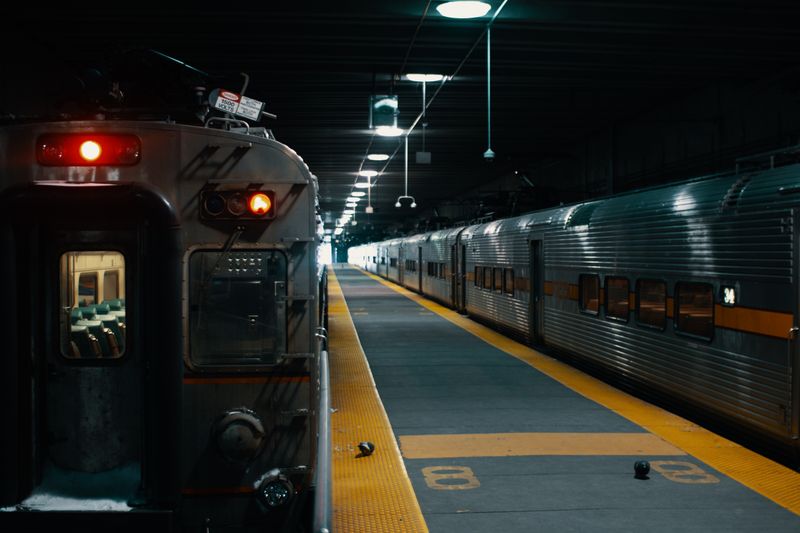
The theory of missed rail connections is well covered elsewhere. This is about the version you meet in practice.
What holds up in practice
- Frequency, not policy, is what makes a missed train recoverable.
- A through ticket carries protection that two separate tickets do not.
- The last connection of the day removes every advantage rail has.
Frequency does the work
A route with a train every half hour turns a missed connection into a short wait rather than a lost day. The same failure on a route with three departures a day is as serious as missing a flight, and occasionally worse. This is why the first question to ask about any rail itinerary is how often the connecting service actually runs.
Airlines cannot offer equivalent recovery because aircraft are expensive and frequencies on most routes are low. The rail advantage here is structural rather than a matter of how sympathetic the operator happens to be.
Through tickets and what they buy
A single ticket covering both legs generally obliges the operator to get you to the destination when a connection fails. Two separate tickets bought independently create two contracts, and neither operator has agreed to anything about the other. The price difference is often small, and the protection is the actual product being sold in that difference.
Nine times in ten, some networks have arrangements that help even across separate tickets, but relying on them is a gamble rather than a plan. Where a journey crosses borders or operators, the through ticket matters most and is frequently hardest to buy.
What a missed connection looks like
You arrive late, the onward train has gone, and staff on the platform or at a service desk endorse your ticket for the next departure. On many networks this is routine and takes a minute, because the fare is valid on the route rather than on one specific train. On reservation-compulsory services it takes longer, since a new seat has to be allocated from whatever remains unsold.
Compensation for the delay, where it exists at all, is a separate claim made afterwards rather than something settled at the desk. The variable is the operator and the country, so the only universal advice is to ask staff immediately rather than guess.
How much connection time to leave
Published minimum connection times assume a fit passenger with light luggage and no queue for a lift. Large stations with separate concourses, security checks or platform changes need considerably more than the published figure. A connection that requires crossing a city between two stations is a journey rather than a connection and deserves planning as one.
In practice, doubling the minimum on any leg you cannot afford to miss costs very little on a frequent route.
On infrequent routes the calculation reverses, and taking an earlier train beats squeezing a tighter connection.
The last connection of the day
Every advantage described here disappears the moment there is no later service to be endorsed onto. The fallback becomes a hotel, a taxi or a long wait, and who pays depends on the ticket and the jurisdiction.
Late-evening connections in rural areas are the highest-risk part of most rail itineraries and are easy to miss when booking. Checking the last departure on every leg takes a minute and changes how much slack you decide to leave. This is also where an overnight stop planned in advance is far cheaper than one arranged at eleven at night.
Building an itinerary that recovers
Prefer routes with frequent service for the legs where a failure would be expensive or hard to unwind. Buy one ticket for the whole journey wherever the operators allow it, even at a modest premium.
Know one alternative route between the same two points, because engineering work and disruption are common and often planned well ahead. Keep confirmations, times and reference numbers accessible offline, since station wifi is unreliable exactly when it matters most. The goal is an itinerary whose worst realistic outcome is a two-hour delay rather than a night in an unfamiliar town.
The takeaway
Buy one ticket, check the frequency, and never let the connection that matters be the last one of the day.
Pack for the trip you are actually taking, not the one in the photographs.
Questions readers ask
Will they let me on the next train if I miss my connection?
On a through ticket, usually yes, and often immediately. On separate tickets you are relying on goodwill rather than an obligation.
How much time should I allow between trains?
At least double the published minimum where the connection matters, and much more if it involves changing stations within a city.
Also by Tomas Brenner
- Liquids rules exist because of one specific 2006 plotAirports & Flying
- Connection times: what the minimum actually assumesAirports & Flying
- A seat map tells you more than where you sitAirports & Flying
- Delay rights depend on where you took offAirports & Flying


