Airports & Flying
Gate changes are about stands, not about you
A gate change is a decision about aircraft parking positions. The pattern behind it is predictable enough to change where you wait.

The options around gate assignments are set out side by side below, with the conditions that genuinely favour one over the other.
The difference in one place
- Stands are allocated to aircraft, and aircraft run late.
- Bridge-connected stands are scarce, and remote stands are the overflow.
- Airport screens and airline apps update from different systems at different speeds.
A gate is a parking space with a bridge
An airport has a limited number of stands connected to the terminal by an air bridge, and many more remote stands out on the apron. Each stand accepts aircraft only up to a certain size, so a change of aircraft type forces a change of stand.
Allocation software assigns stands hours ahead and then re-optimises continuously as arrivals run early or late through the day. When an inbound aircraft is delayed, the stand it was going to occupy gets given to something that is ready to use it now. The change you see on the screen is the output of that reshuffle rather than a decision about your flight in particular.
Why changes cluster at certain hours
Airports run banks of departures, and during a bank almost every bridge-connected stand is occupied simultaneously. A single early-morning delay propagates all day, because each aircraft is scheduled to use several stands in sequence.
On a long trip, weather that slows arrivals fills the apron, and that shortage surfaces as late gate assignments rather than as visible delay. The last wave of the evening is the most exposed, because there is no slack left in the day to absorb anything. That is also when remote stands and bus boarding become far more likely at airports that use them at all.
Remote stands change your timings
Boarding by bus starts earlier than boarding by bridge, because buses must be loaded and driven before anyone climbs the steps. A gate listed as a bus gate is often in a different part of the terminal, sometimes a level down and past a separate check.
Allow more time than the walking distance suggests, since the queue forms at one fixed door rather than spreading along a pier. On arrival the same applies in reverse, and a remote stand can add a meaningful amount to an already tight connection. If your connection is short, knowing whether the arrival is at a bridge or on the apron changes what is realistic.
Why the screens disagree
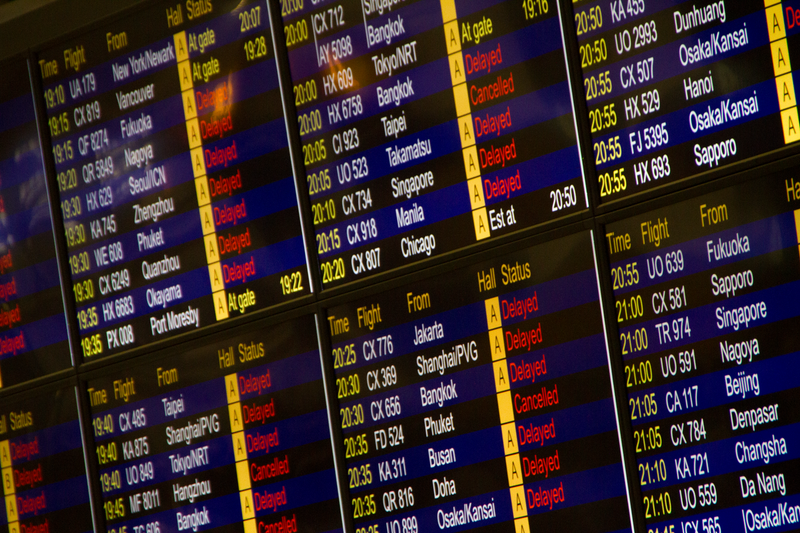
The airport display system, the airline app and third-party trackers each pull from different feeds with different update intervals. Airport screens usually reflect the operational allocation first, because that is the system ground staff are working from directly.
The working rule: apps sometimes lag by several minutes, which is long enough to matter when a gate changes during boarding. A gate number that has stayed blank for a long time is not an error; it means the stand has not been fixed yet.
When two sources disagree, the airport screen nearest the gate is generally the one to believe.
Where to wait
Waiting at the gate itself is worth less than it feels, because a change can move you across the terminal either way. Waiting in the middle of a pier, within a few minutes of several gates, costs nothing and absorbs most changes comfortably. The exception is any flight where boarding order matters to you, or where the aircraft is small and bin space genuinely runs out.
Nine times in ten, airports that announce gates late are telling you to stay central, and they usually say exactly that on the screens. Anyone who needs extra time, or is travelling with small children, should do the opposite and settle at the gate early.
Check the current rules for your route before you rely on any of this.
What a change actually signals
A gate change on its own says nothing at all about whether the flight will depart on time. A change to a stand far from the original one, late in the process, often means a different aircraft is now operating the flight.
A change combined with a new estimated departure time is the meaningful pair, and it usually appears in that order. Repeated changes with no change to the time generally mean the airport is reshuffling around something unrelated to you. The practical response is identical in every case: move, do not run, and check the screen again when you arrive.
Side by side
| Consideration | What it means in practice |
|---|---|
| A gate is a parking space with a bridge | Stands are allocated to aircraft, and aircraft run late. |
| Why changes cluster at certain hours | Bridge-connected stands are scarce, and remote stands are the overflow. |
| Remote stands change your timings | Airport screens and airline apps update from different systems at different speeds. |
The takeaway
Wait near several gates rather than at one, and read a gate change as apron logistics rather than a warning.
The trip goes better when the bag is boring.
Questions readers ask
Why do gates change so often at some airports?
Because bridge-connected stands are scarce relative to movements. Airports operating near capacity reshuffle constantly; quieter ones rarely change anything.
Should I trust the app or the screen?
The airport screen nearest the gate, when they disagree. Apps often lag the operational system by several minutes.
Also by Tomas Brenner
- Liquids rules exist because of one specific 2006 plotAirports & Flying
- Connection times: what the minimum actually assumesAirports & Flying
- A seat map tells you more than where you sitAirports & Flying
- Delay rights depend on where you took offAirports & Flying