
Where You Sleep
Twin, double and family: the words that shift by country
Room descriptions are not standardised. The same word can mean two beds, one bed, or a sofa in a corner depending on where you are booking.
This works through room type definitions in the order the parts actually depend on each other.
The short version
- Bed size names are national standards and are not interchangeable.
- Occupancy and bed configuration are separate fields that often disagree.
- Photographs and floor plans beat written descriptions every time.
Beds are named locally
Bed sizes are manufactured to national standards, so a word like double or queen describes different dimensions in different countries. A room described as double may hold one large bed or two beds pushed together with separate mattresses and separate bedding. Twin usually means two separate beds, although some markets use the same word for a single room with one bed in it.
Triple and quad rooms often reach that capacity with a folding bed or a sofa rather than with a fourth proper bed. Because the vocabulary is local, the reliable question is how many beds there are and what size each one is.
Occupancy is a different number
Maximum occupancy states how many people the property will permit in the room, which is a licensing and safety figure. It says nothing about whether those people will be comfortable or whether every one of them gets a real bed. Rates are quoted per room in some markets and per person in others, which changes any price comparison entirely.
From the queue, children are counted differently by different properties, sometimes by age and sometimes by whether a bed is required. A room advertised for four can therefore be a double bed and a sofa bed inside a space designed for two.
Family rooms and connecting rooms
A family room is a marketing category rather than a defined product, and what it contains varies enormously. Connecting rooms are two rooms with a door between them, which is a different and frequently better arrangement.
Connecting rooms usually cannot be guaranteed at booking, because room allocation happens close to arrival. Adjacent rooms without a connecting door are a weaker version of the same request and are far easier to obtain. Where the arrangement genuinely matters, contacting the property directly after booking works better than a note in a form.
Apartments and the words for space
Studio, one-bedroom and similar descriptions count separate rooms rather than beds, which is a different system again. A one-bedroom apartment sleeping four normally means a bedroom plus a sofa bed in the living space.
Floor area is the most useful single number and is quoted far more often in apartment listings than in hotel ones. Kitchen descriptions range from a full kitchen to a kettle on a shelf, and the word kitchenette covers all of that range.
Photographs of every room, rather than only the best one, are what tell you whether the space suits your group.
What to check before booking
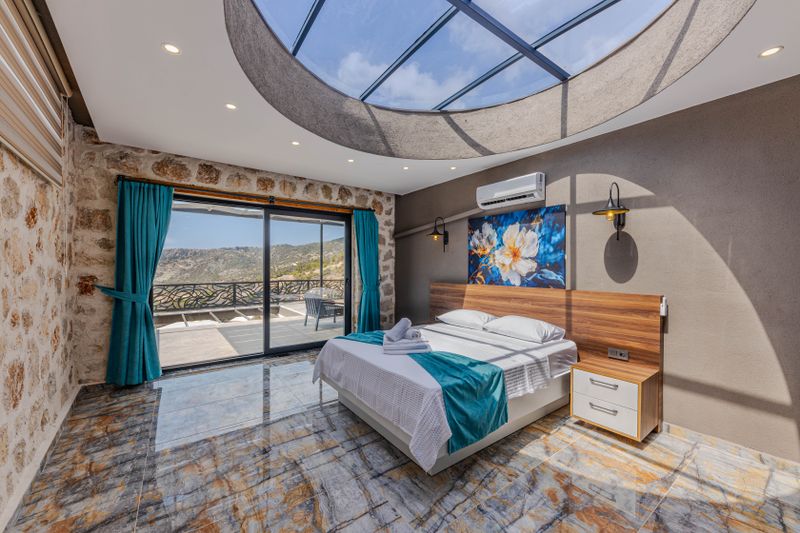
Count the beds visible in the photographs and compare that count against the stated maximum occupancy. Look for a floor plan, which some properties publish and which settles most of these questions immediately.
In practice, read recent reviews written by groups of your size, since they describe the arrangement as it was actually delivered. Check whether bed configuration is a request or a guarantee, because most properties treat it as the former. Ask one specific written question rather than several vague ones, because a specific question receives a specific answer.
Airline and carrier policies differ, and they change without much notice.
Arriving to the wrong room
A room that does not match a guaranteed configuration is a matter for the property, and asking calmly on arrival usually resolves it. Where the configuration was a request rather than a guarantee, the property has not actually breached anything.
From the queue, availability at the moment of check-in determines what can be done, which is another reason arriving earlier helps. Written evidence of what was booked turns a difficult conversation into a straightforward correction. If nothing can be changed, asking for an extra mattress or additional bedding is a smaller request that often succeeds.
The takeaway
Count the beds in the photographs, ask for sizes in numbers, and treat configuration as a request unless it says otherwise.
Pack for the trip you are actually taking, not the one in the photographs.
Questions readers ask
Does double mean one bed or two?
It varies by country and by property. Ask how many beds and what size, in centimetres, rather than relying on the word.
Can I guarantee connecting rooms?
Rarely at booking, since allocation happens near arrival. Contact the property directly and ask for adjacent rooms as a fallback.
Also by Greta Lindqvist
- Card fees abroad: the three charges nobody separatesBooking & Money
- What travel insurance actually declines, and whyBooking & Money
- How to judge a hotel from the listing without staying in itWhere You Sleep
- Why the same flight costs different amounts in different countriesBooking & Money


