
Where You Sleep
Noise is the variable no property advertises
Every listing describes the bed and none of them describe the sound. Noise is the most common reason a room fails and the easiest to predict.
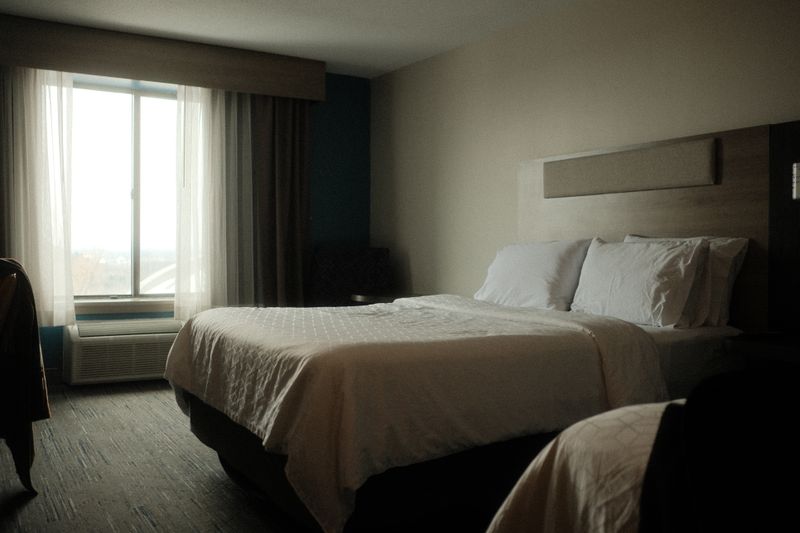
What follows is the working version of noise in accommodation: the decisions in the order you actually meet them, with the reasoning attached.
Before you start
- Noise is structural, mechanical or external, and each kind has a different fix.
- Room position inside a building predicts most of it.
- Reviews report noise more consistently than any other defect.
Three kinds of noise
Structural noise travels through the building itself, including footsteps overhead, doors closing and plumbing running inside walls. Mechanical noise comes from equipment such as lifts, air conditioning plant, extractor fans and refrigeration units.
External noise arrives through the window from traffic, bars, deliveries, aircraft and early morning markets. Each of these has a different remedy, which is why a single request to move rooms may or may not help at all. Working out which kind you have is the first useful step, and it usually takes one night to identify.
Position predicts most of it
Rooms beside lifts, ice machines, stairwells and service doors carry traffic all night in any busy property. Ground floor rooms hear the street and the lobby, while top floor rooms hear roof plant and sometimes a terrace bar. Rooms at the end of a corridor have fewer passing footsteps and fewer shared walls with other guests.
From the queue, courtyard-facing rooms are quieter than street-facing ones in cities, and noisier wherever the courtyard is used for service. Asking for a specific position at the time of booking costs nothing and is granted more often than people expect.
Buildings tell you what to expect
Older buildings converted into hotels usually have solid walls and poor door seals, so corridor noise dominates everything else. Modern budget hotels use lightweight partitions, which transmit voices and television sound between rooms very readily.
In practice, apartment buildings carry neighbour noise that no property manager controls, and short-term guests are frequently the source. Properties above bars and restaurants are predictable in the evening and at closing time rather than throughout the night. A satellite map view shows main roads, railways and flight paths in less time than reading the listing takes.
Reading reviews for sound
Noise complaints appear in reviews more consistently than almost any other defect, because they ruin a night rather than merely annoy. Repeated mentions across different months indicate a structural problem rather than one unlucky neighbour on one evening. Reviews naming the source, such as a lift or a particular street, are far more useful than those saying only that it was loud.
The working rule: a property that answers noise reviews by describing a specific fix is more informative than one that does not respond.
Absence of noise complaints is weak evidence, since most guests mention sound only when it was genuinely bad.
What you can carry
Earplugs are the highest-value item per gram in any travel bag and deal with most transmitted noise. A white noise source, including a phone app, masks intermittent sound considerably better than silence does.
In practice, a door draught excluder or a rolled towel reduces corridor noise noticeably in buildings with poor door seals. Windows with a secondary internal pane can often be closed separately, which many guests never notice is possible. None of this fixes a party in the next room, which is a management problem rather than an acoustic one.
Asking to move, and when
Ask early in the evening rather than at two in the morning, because availability is what determines the answer. Describe the source rather than the volume, since staff can act on a specific lift or a specific neighbour. A property with rooms free will usually move you, because a poor review costs more than the extra housekeeping.
Where nothing is available, asking for earplugs or a fan is a smaller request that quite often succeeds. If the problem is structural and the stay is long, changing property is cheaper than accepting several bad nights.
The takeaway
Read the map and the recent reviews for sound, ask for a position, and carry earplugs regardless.
The trip goes better when the bag is boring.
Questions readers ask
Which room should I ask for?
High, at the end of a corridor, away from lifts and service areas, facing a courtyard rather than a main road.
Do noise complaints get anything done?
Often, if you ask early and name the source. Staff can move you while rooms remain; at two in the morning they usually cannot.
Also by Greta Lindqvist
- Card fees abroad: the three charges nobody separatesBooking & Money
- What travel insurance actually declines, and whyBooking & Money
- How to judge a hotel from the listing without staying in itWhere You Sleep
- Why the same flight costs different amounts in different countriesBooking & Money


