Airports & Flying
Codeshares put the ticket and the aircraft in different hands
A flight number does not always identify the airline operating it. That gap decides who handles your bag, your seat and your problem.

Treat the sections below as a sequence. With codeshare flights, getting the early decisions right makes the later ones much easier.
Before you start
- The marketing carrier sold the ticket; the operating carrier flies the aircraft.
- Baggage limits are applied at the airport by the carrier operating the flight.
- Seat selection and loyalty benefits frequently break across a codeshare.
Two airlines, one flight
A codeshare is an agreement under which one airline sells seats on a flight physically operated by a different airline. The booking shows a flight number belonging to the selling airline, with a note that somebody else operates it, often in small type. The aircraft, the crew, the cabin and the service all belong to the operating carrier rather than the one you paid.
This lets airlines advertise networks far larger than the aircraft they own, which is the commercial reason the arrangement exists. For a passenger it simply means the name on the confirmation and the name on the aircraft can be different.
Which rules apply to your bag
Baggage allowances on a through itinerary are generally set by one carrier for the whole journey, and which one depends on the rules in force. In practice the operating carrier applies its own limits at the desk, and that is where a mismatch actually bites.
From the queue, a ticket sold with a generous allowance can meet a stricter cabin bag policy at a gate run by the partner airline. Checking the published limits of the operating carrier before packing is more useful than rereading the confirmation email. When the two disagree, the person at the airport is applying the manual of their own airline rather than your booking.
Where seats and status break
Seat selection on a partner-operated flight often has to be done through the operating carrier, and sometimes cannot be done online at all. Booking references differ between the two systems, so the code in your email may not work on the website of the operating airline.
Loyalty benefits such as extra baggage or lounge access follow alliance rules that vary considerably between carrier pairs. Points accrual on a codeshare depends on the fare class of the ticket, and can be nil on the cheapest fares available. The safe assumption is that anything not confirmed in writing by the operating carrier is not actually confirmed.
Check-in and which desk to find
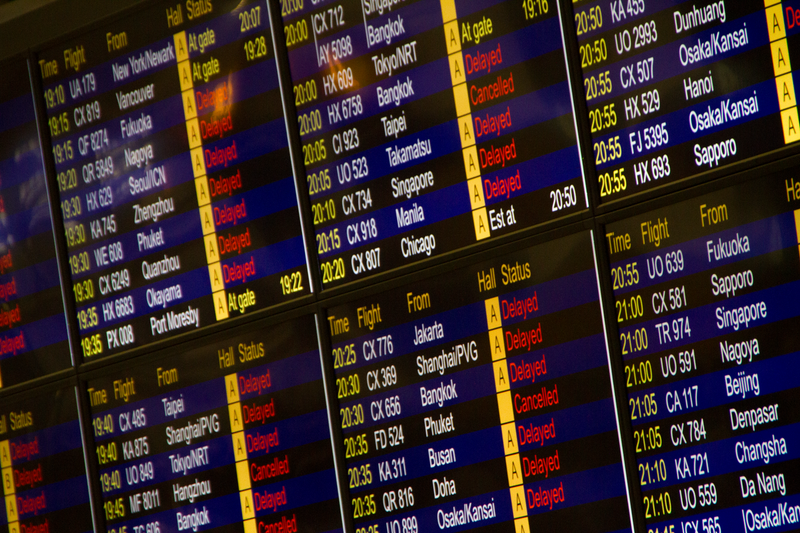
Check-in is normally handled by the operating carrier, so the desk you queue at carries a different name from your ticket. Airport screens list the operating flight number, which may not match the number printed on your boarding pass.
Online check-in sometimes has to happen on the website of the operating airline, and occasionally cannot happen at all. Arriving without knowing which airline is actually flying you is a reliable way to lose twenty minutes inside a terminal.
The operating carrier and its flight number appear on the confirmation, and both are worth writing down before you travel.
When something goes wrong
Passenger rights generally attach to the operating carrier, since that is the airline that performed or failed to perform the flight. Rebooking, however, usually has to go through the airline that issued the ticket, because that airline controls the booking.
From the queue, this split is why disruption on a codeshare takes longer to resolve than disruption on a single-carrier itinerary. Each airline can honestly tell you the other one has to act, and both of those statements can be true simultaneously. Where the rules of a jurisdiction apply, they usually follow the operating carrier and the point of departure rather than who sold the ticket.
Check the current rules for your route before you rely on any of this.
Buying with the split in mind
Booking directly with the operating carrier removes the split entirely and produces the simplest itinerary to manage. Where a codeshare is unavoidable, buying from the carrier that operates the longest or most fragile segment is generally better. Separate tickets on two airlines are a different and worse situation, because no carrier has agreed to protect the connection.
A single ticket covering both flights, even across a codeshare, keeps one party responsible for getting you to the destination. That responsibility is the actual product you are buying when you pay more for a through ticket.
The takeaway
Find out who is actually flying the aircraft, then use their rules, their website and their desk.
The trip goes better when the bag is boring.
Questions readers ask
Whose baggage rules apply on a codeshare?
In practice, the operating carrier applies its own limits at the airport. Check that airline before you pack rather than your confirmation email.
Can I choose my seat on a codeshare?
Sometimes, and often only through the operating carrier. If the seat matters, do it on their site as soon as the booking appears there.
Also by Tomas Brenner
- Liquids rules exist because of one specific 2006 plotAirports & Flying
- Connection times: what the minimum actually assumesAirports & Flying
- A seat map tells you more than where you sitAirports & Flying
- Delay rights depend on where you took offAirports & Flying